Why It Happens Here
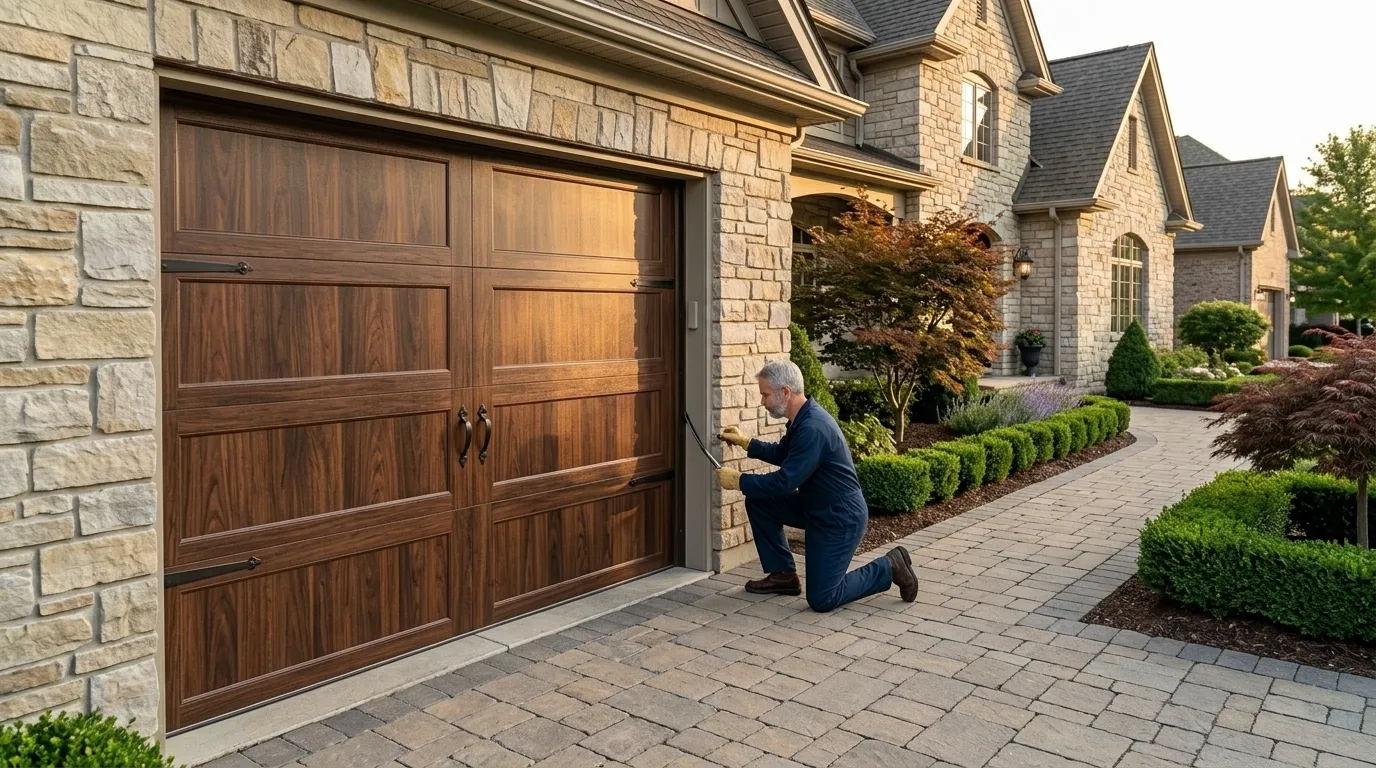
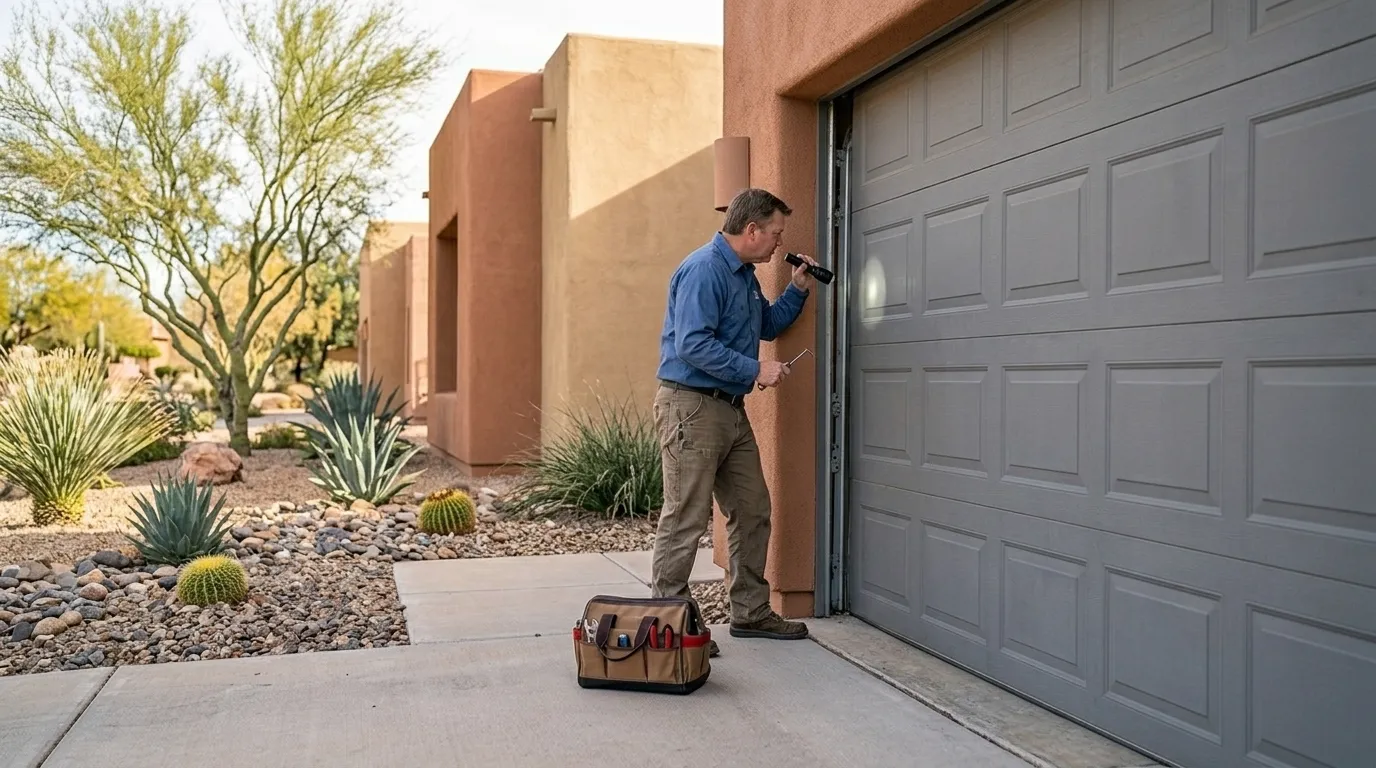
Most of the housing across this service area went up between 1989 and 1992, and that matters for panels more than people think. Doors from that era in Fox Farm-College, South Greeley, and out toward the Ranchettes are almost all steel sandwich panels with a thin skin over foam. That skin dents easily, and thirty-some years of freeze-thaw cycles have already worked on the seams.
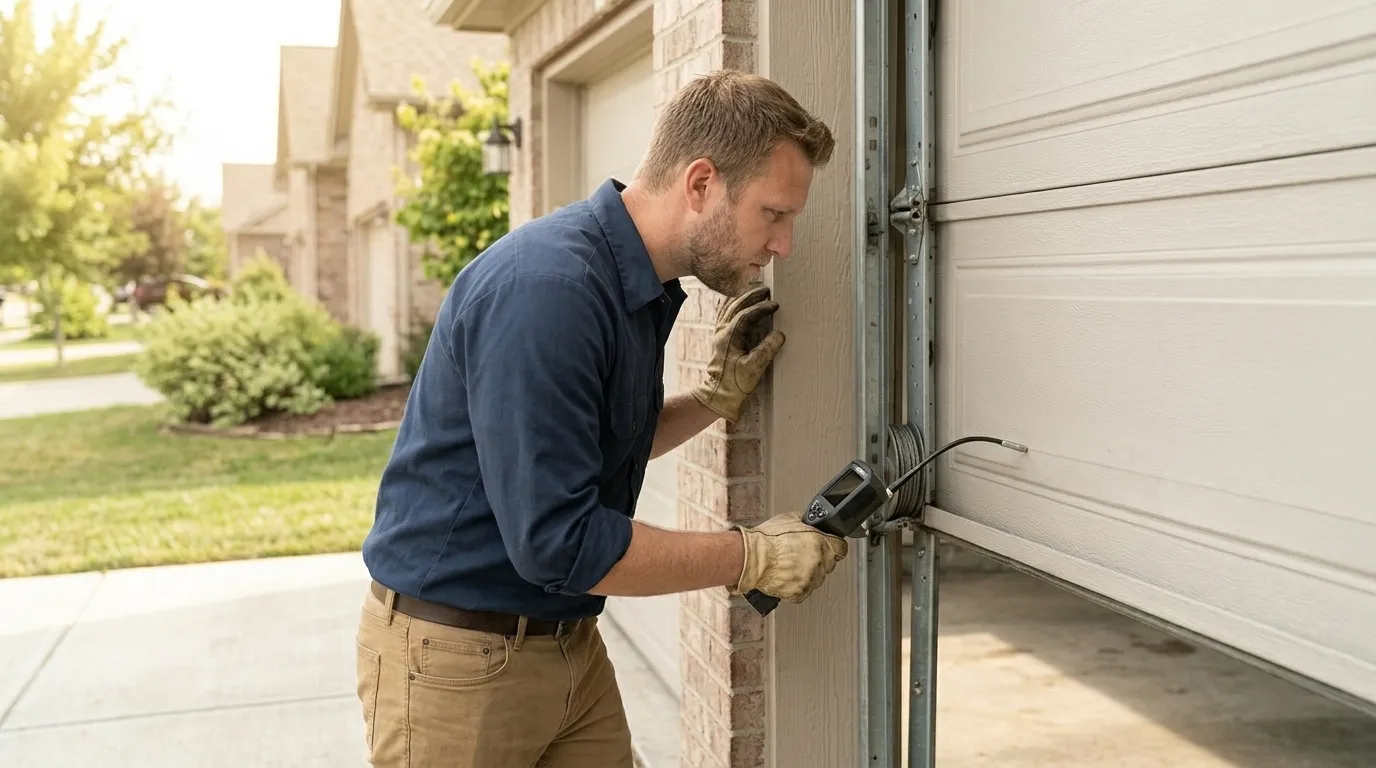
Cheyenne sits in a severe cold band, and that's the other half of the problem. A panel that's already dented traps moisture in the foam core behind it. The moisture freezes, expands the gap between skin and frame, and the next ding in the same spot goes clean through instead of just denting. You'll see this most on the bottom two panels, where a bumper hit or a snowblower clip starts the damage and winter finishes it.
It's not that Cheyenne doors are weaker. It's that the age of the stock and the cold band stack on top of each other. A panel crack that would sit quiet for years in a mild climate keeps working here every winter until it splits or the section starts to bow when the door closes.
The Cost of This Job
What drives the price on a panel job is whether we can match the section or have to replace the whole run. Doors built in the early '90s often used panel profiles and colors that aren't stocked anymore, so a single-panel swap sometimes isn't possible even when only one panel is damaged - the whole door has to come off in that case.
We don't have a set price to quote here, because it depends on the door width, the panel count, and whether the track and hardware need to come off to get the old section out. What we can tell you is that a single-panel swap on a matching door is a smaller job than most homeowners expect, and a full-door panel replacement because of a mismatch is closer to a door replacement in scope.
One honest limit: if your door is old enough that the manufacturer no longer makes that panel style, we'll tell you that up front instead of chasing a match that doesn't exist. Sometimes the right call is a new door section, not a patch.
What the Repair Takes
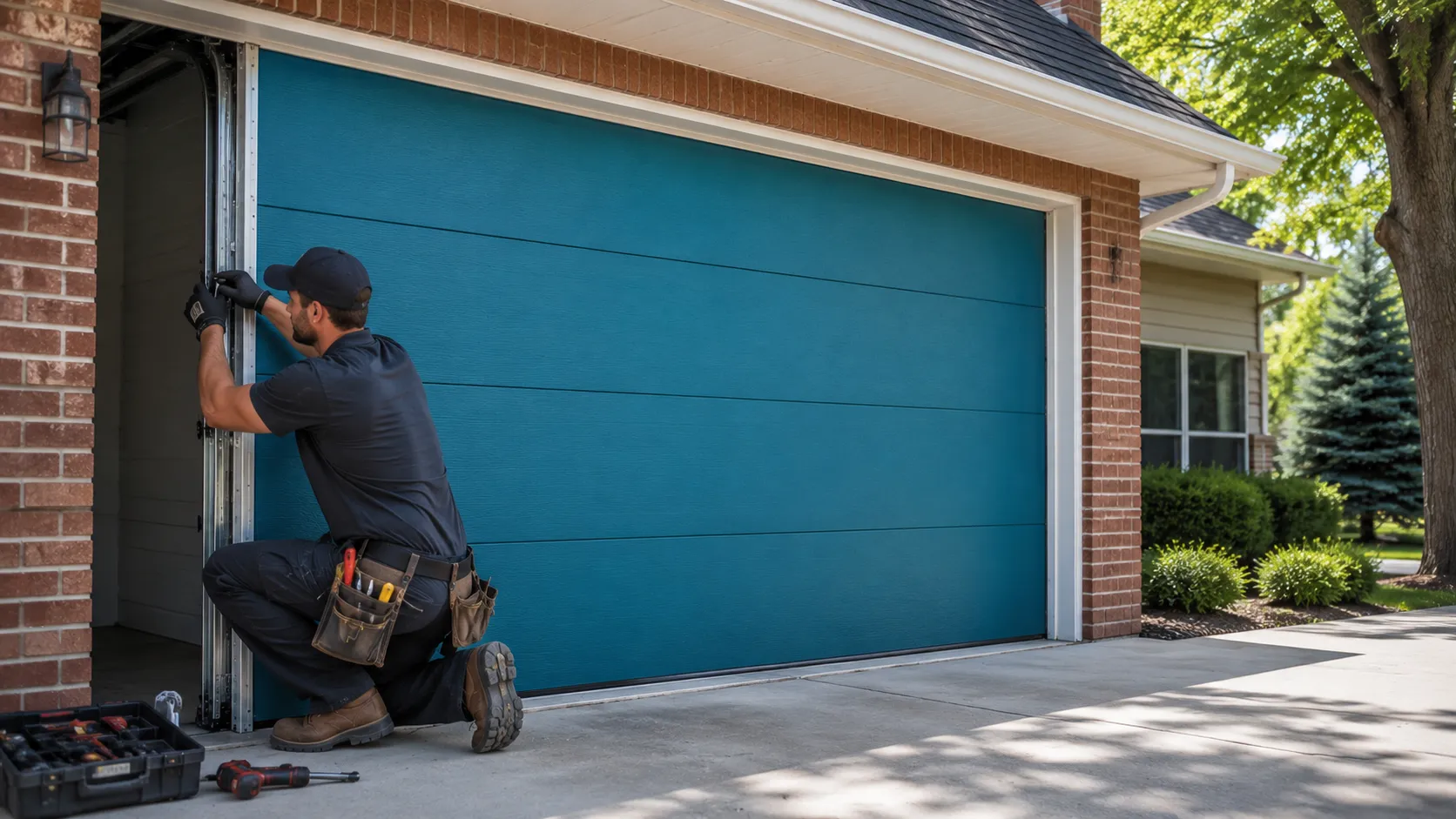
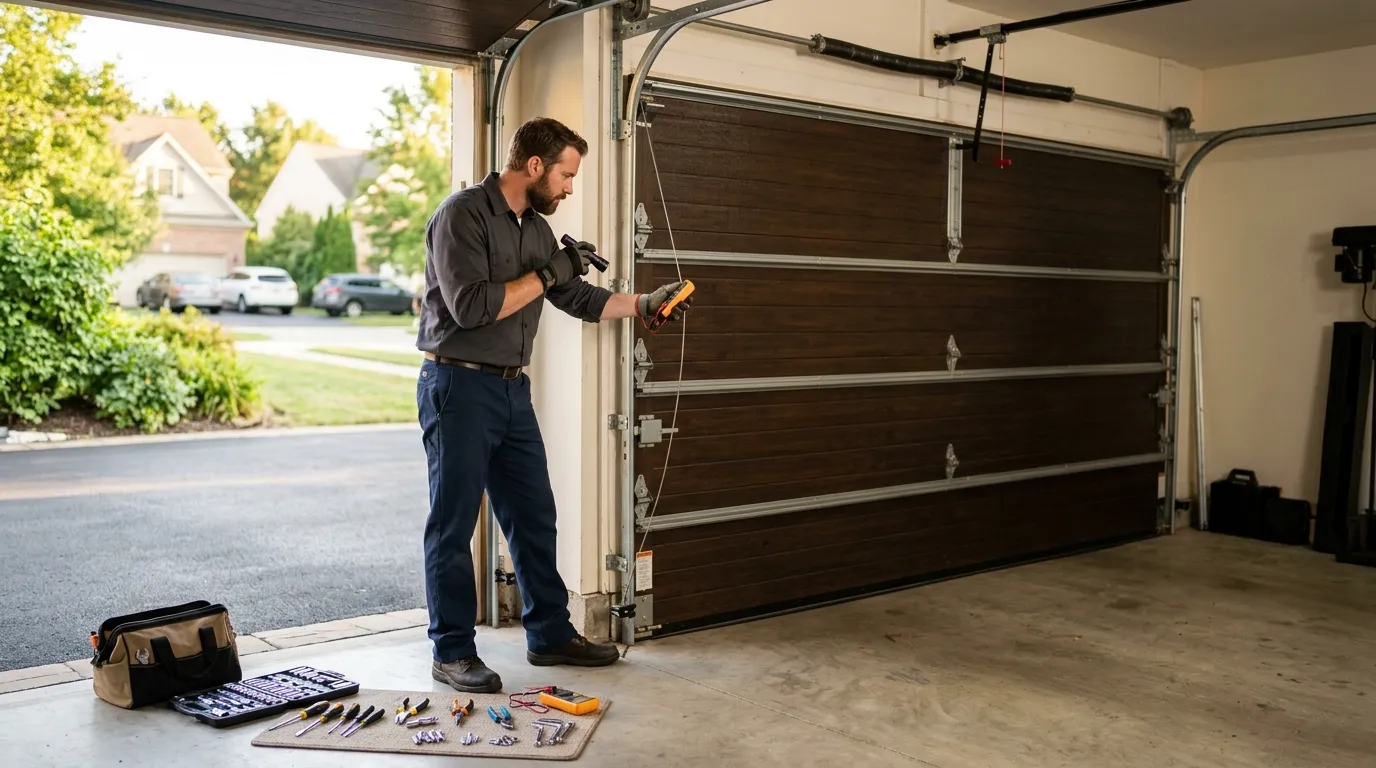
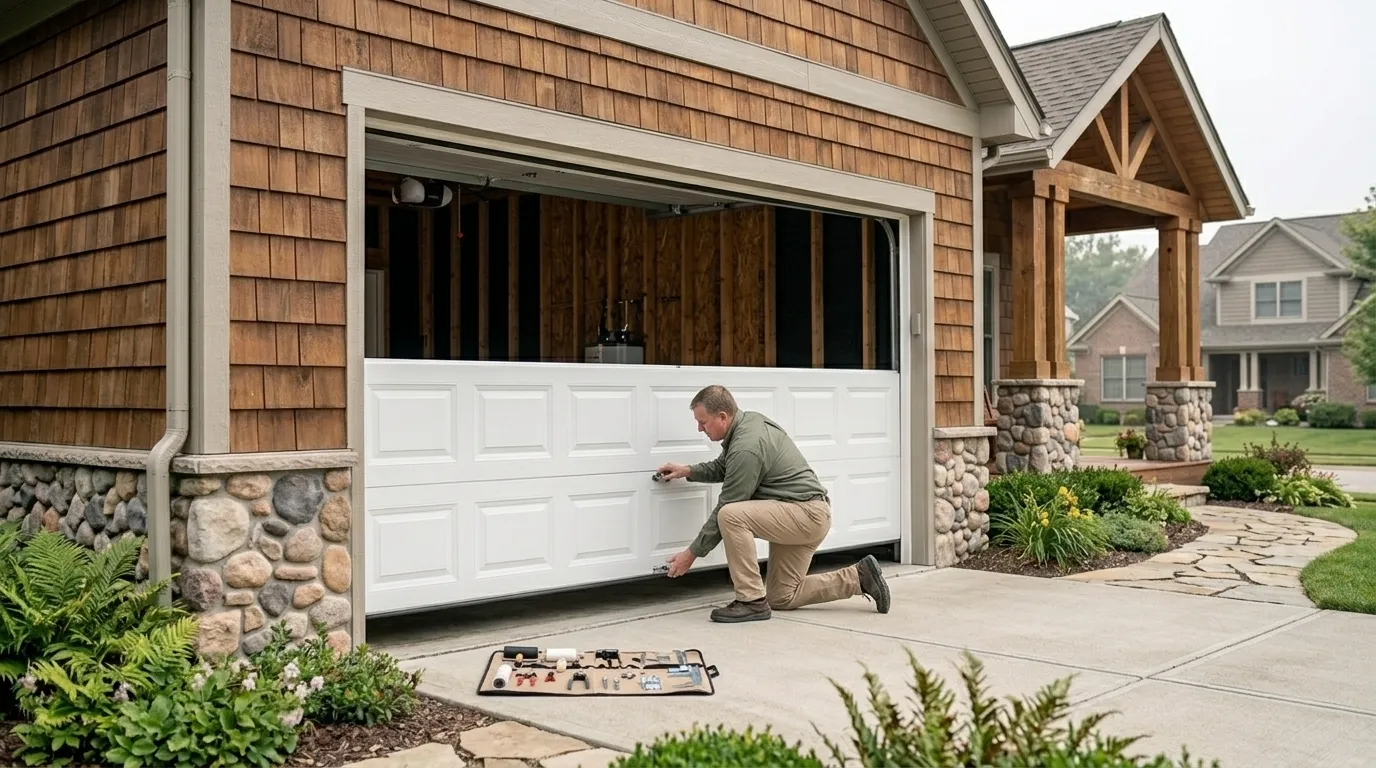
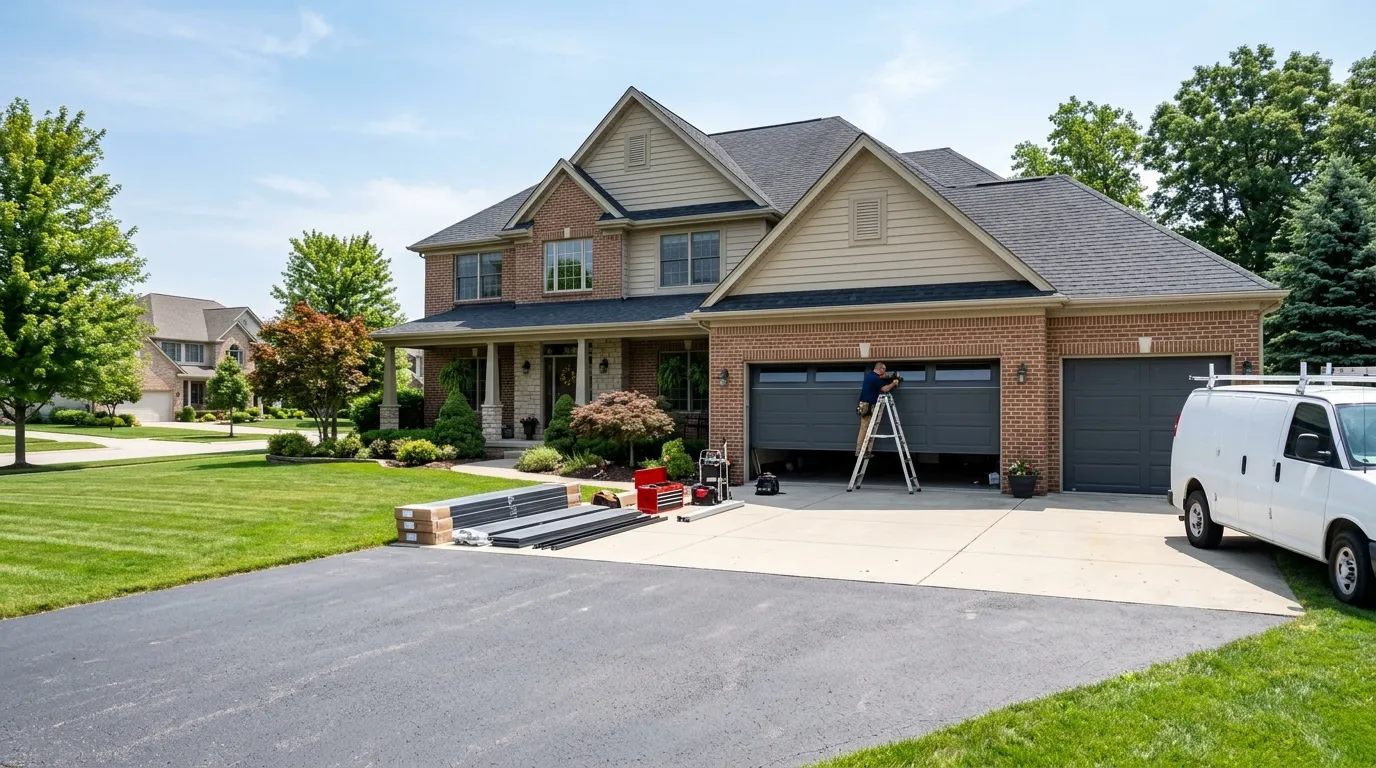
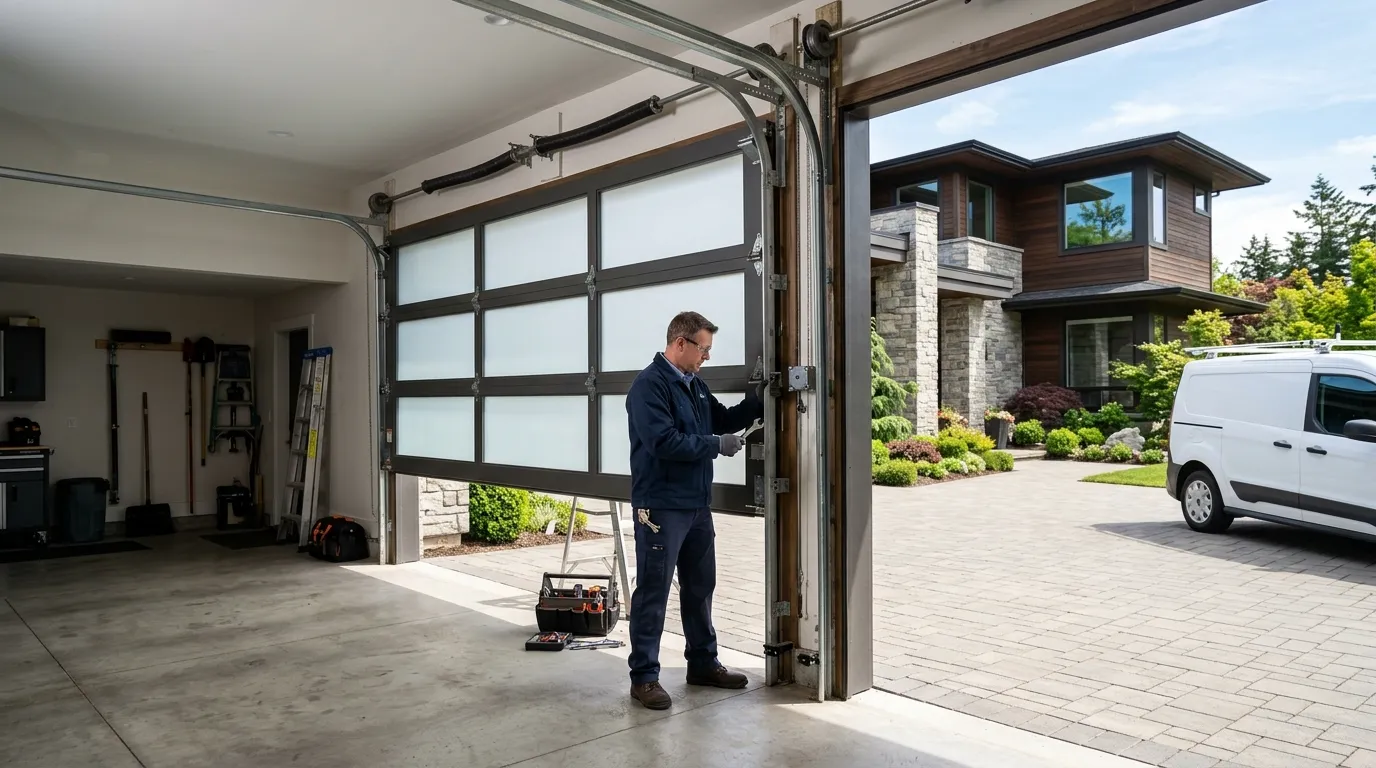
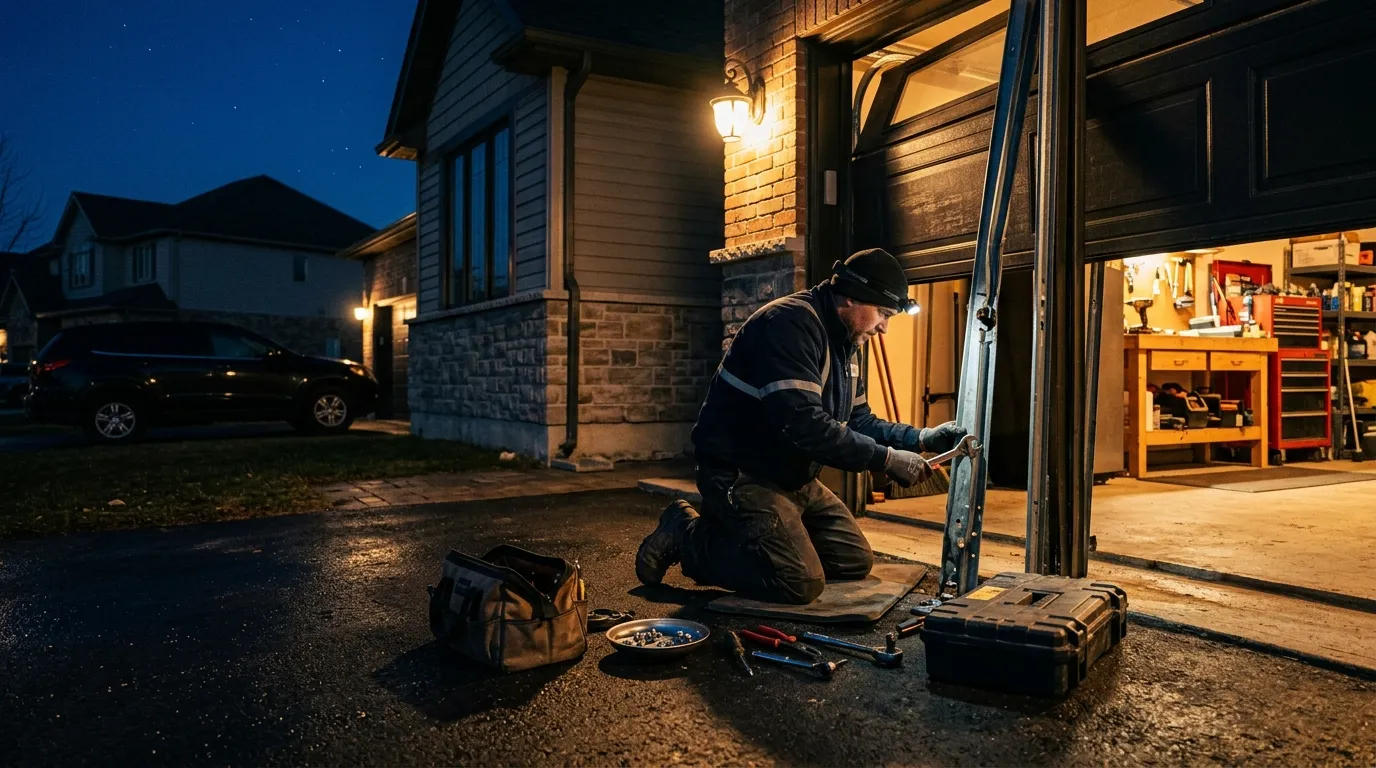
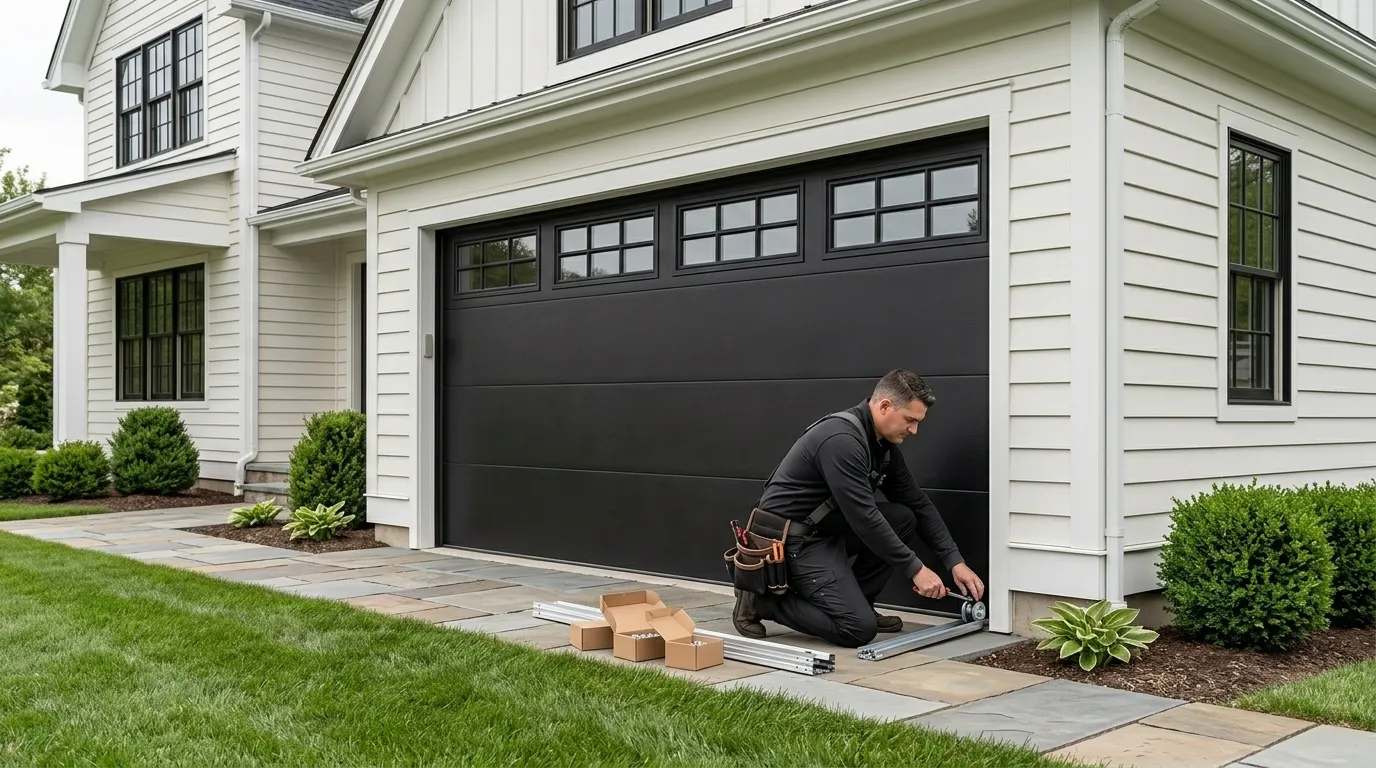
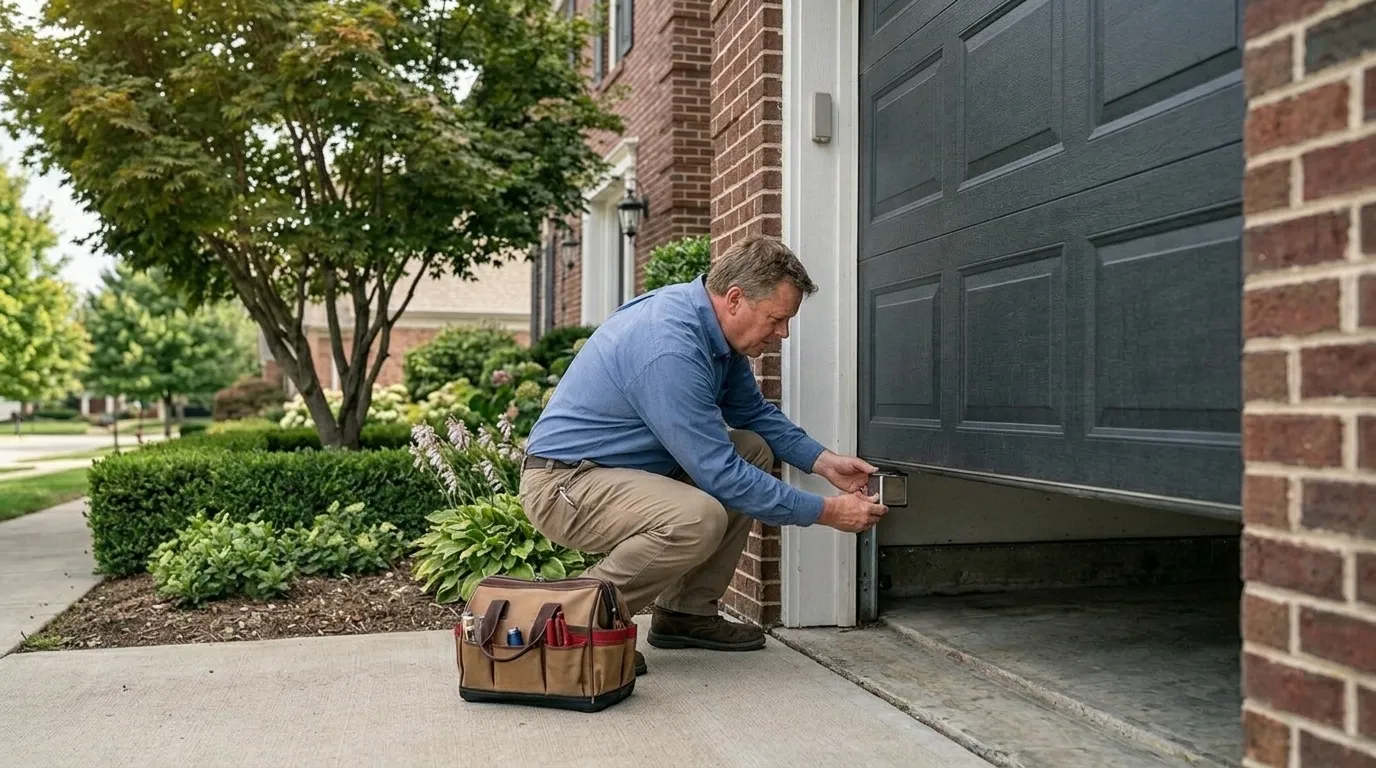
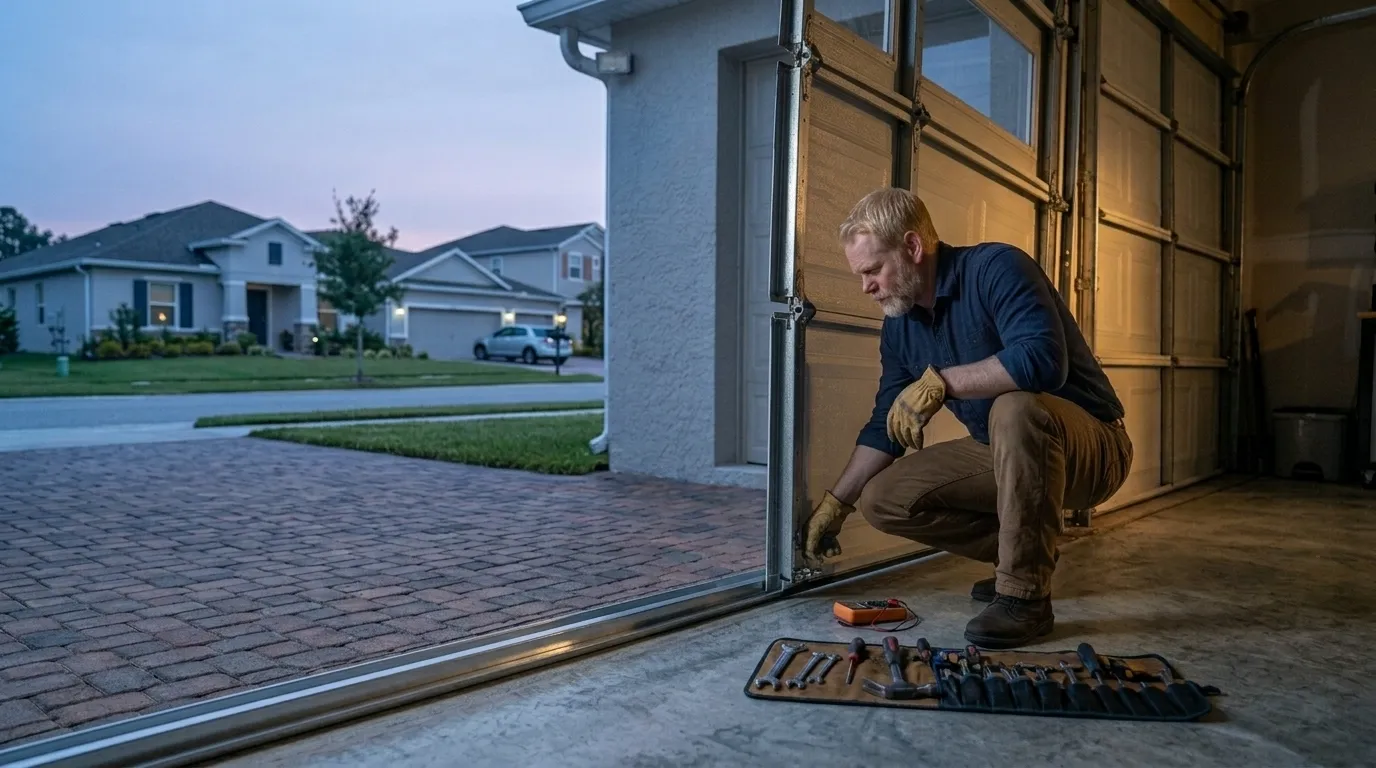
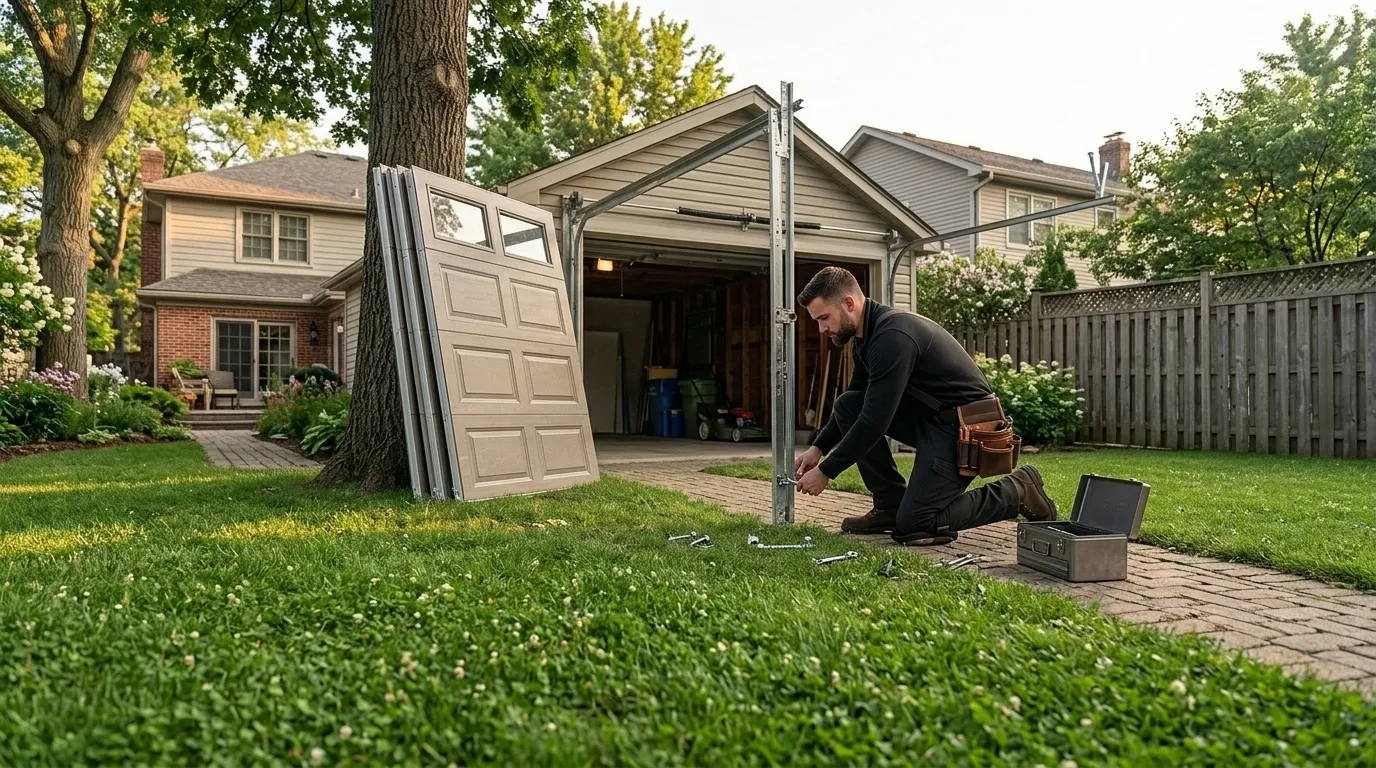
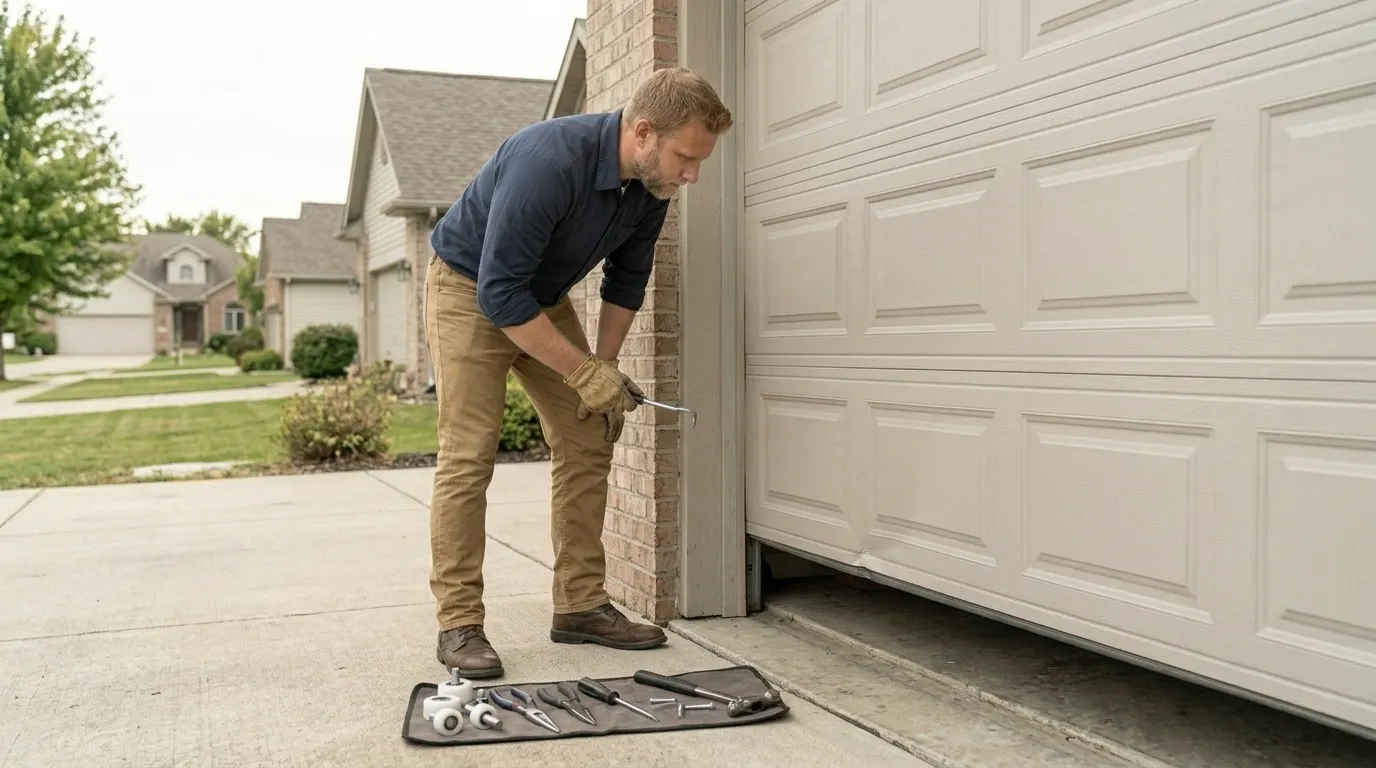
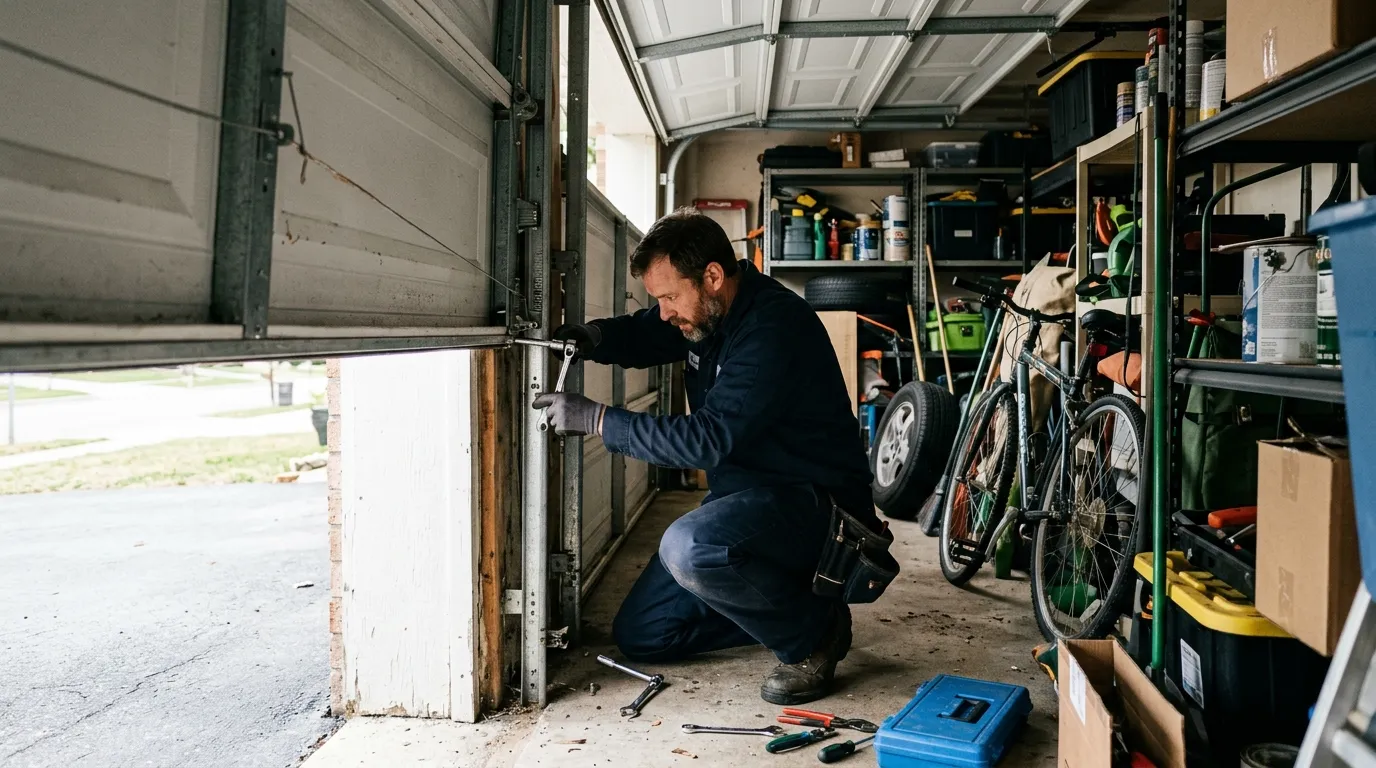
For a single-panel swap where the section still matches, the job is mostly disconnection and reattachment: the track brackets come off, the damaged section slides out, the new one goes in, and the hinges and rollers get reset. That's a contained job most days.
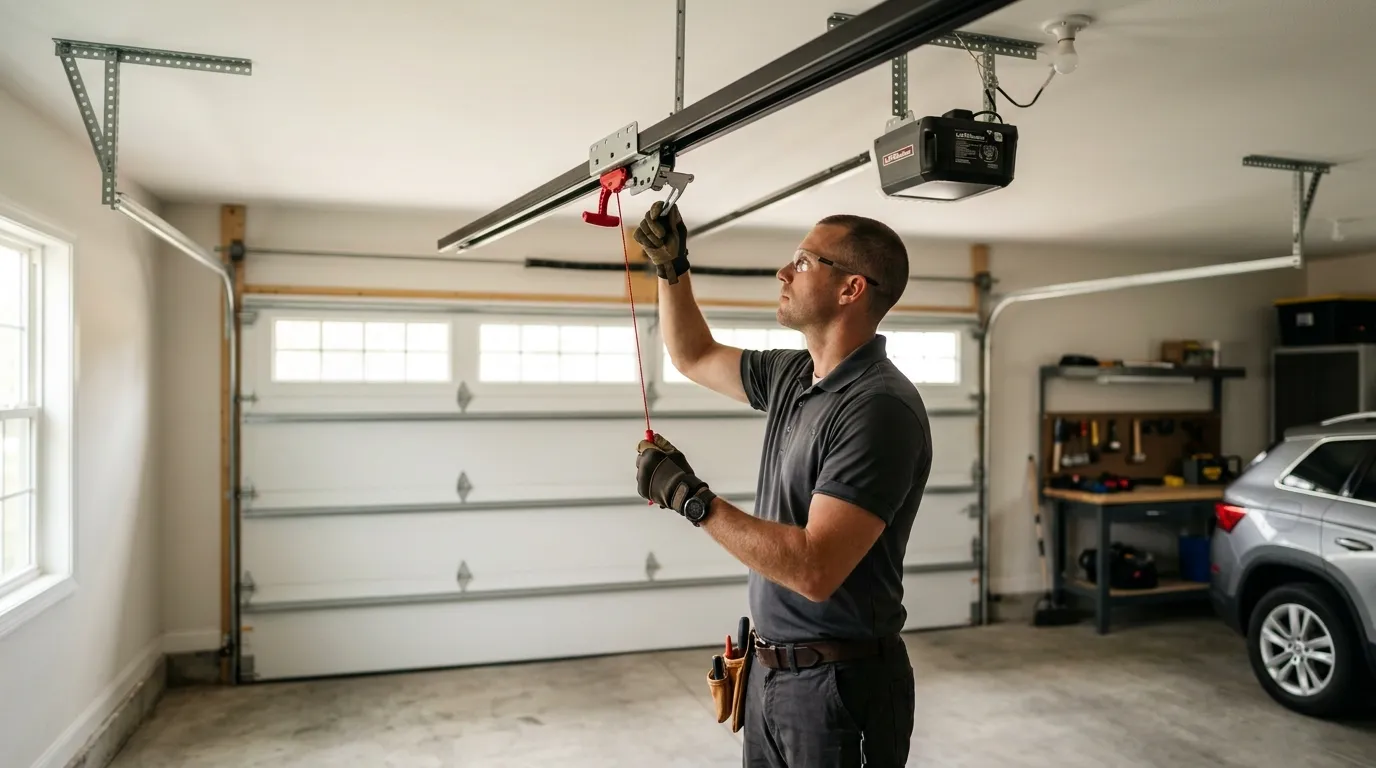
When the panel style is discontinued - common on doors from the 1989-1992 build era once the original run is gone - the fix moves to replacing the full door or the full panel set, which means pulling the springs and reinstalling the whole track alignment, not just one section.
Across the 6,055 households in this service area, with 2,753 of them owner-occupied houses and a median household income of $53,625, we see both kinds of jobs regularly - straightforward panel swaps on newer replacement doors, and full-section jobs on original doors that have never been touched since the house was built. We'll tell you which one you've got before we start, not after.