Why It Happens Here
Most of the housing across Cheyenne's service area, Fox Farm-College a mile out, South Greeley two miles out, and the Ranchettes six miles further, went up between 1989 and 1992. That's not a small detail for rollers. Doors installed during that build window came standard with steel rollers riding directly in steel track, no nylon, no sealed bearings, just metal on metal with a coat of grease that dried out decades ago.
Cheyenne sits in a severe cold climate band. That matters for rollers specifically because steel contracts in the cold and the tolerances inside the roller stem tighten up right when the door gets used the most, first thing in the morning before the sun's done anything for the slab temperature. Grease that was already thin from age turns closer to solid at low temps, so the roller doesn't spin, it drags. A dragging roller wears a flat spot fast, and a flat-spotted roller starts chewing the track edge instead of riding it.
Across the wider service area the stock is mostly 1980s and 90s construction, which means a lot of these doors are hitting the 30-plus year mark on original hardware at roughly the same time. It's less a coincidence than a predictable wave.
The Cost of This Job
We don't have a set price to quote you here, and giving you one without seeing the door would be a guess dressed up as a fact. What actually moves the number: how many of the ten rollers on a standard double door are bad versus all ten, whether you go steel or nylon, and whether the track took damage from the grinding before anyone noticed.
A full roller set, all ten, nylon instead of steel, costs more up front than replacing three or four steel ones, but nylon doesn't need lubrication the same way and handles temperature swings better, which matters given the climate here. If the track itself got scored or bent from a roller riding wrong for months, that's a separate repair, not part of a roller swap, and it changes the number.
Median household income across this service area runs around $53,625, which is part of why most owners we talk to want the honest range up front, full roller set versus partial, steel versus nylon, before deciding. We'll tell you what we find on the door in front of us, not what a website guessed it should cost.
What The Repair Takes
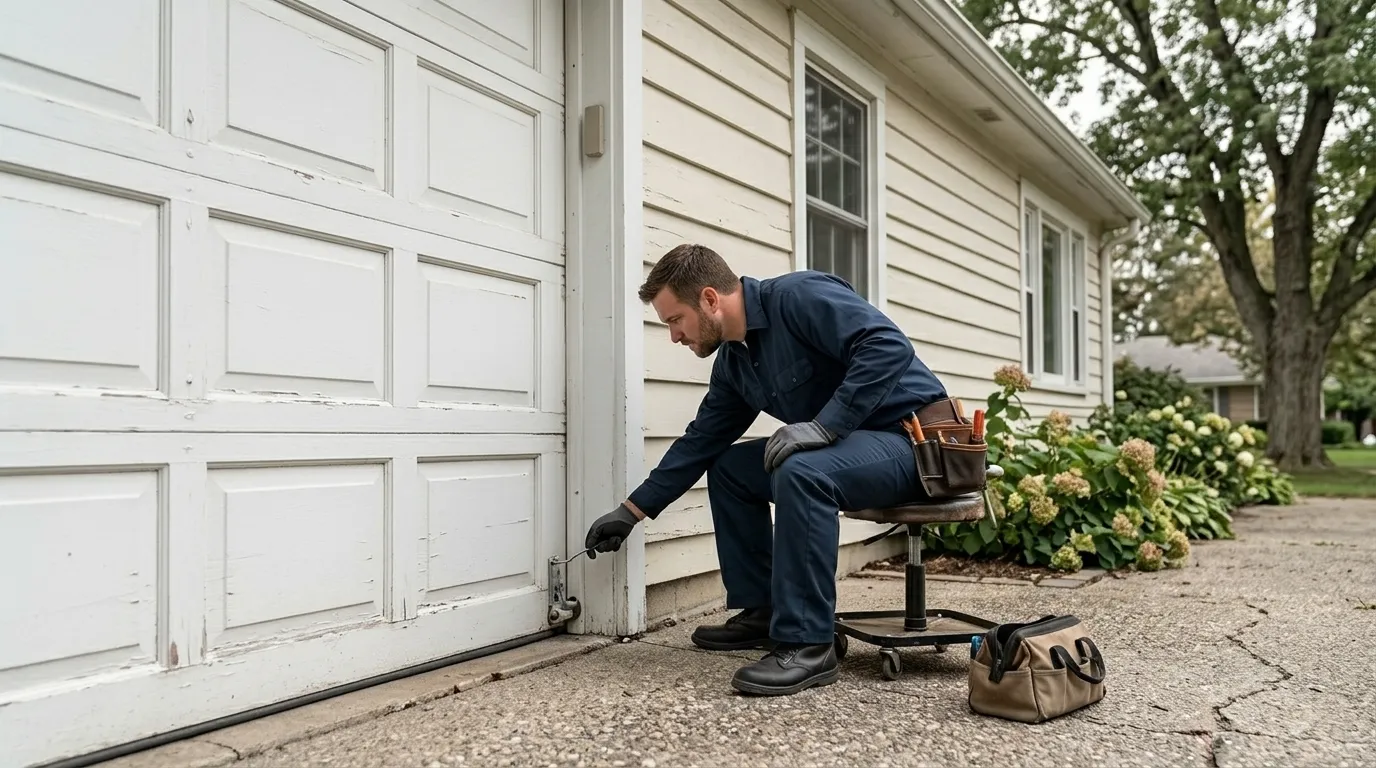
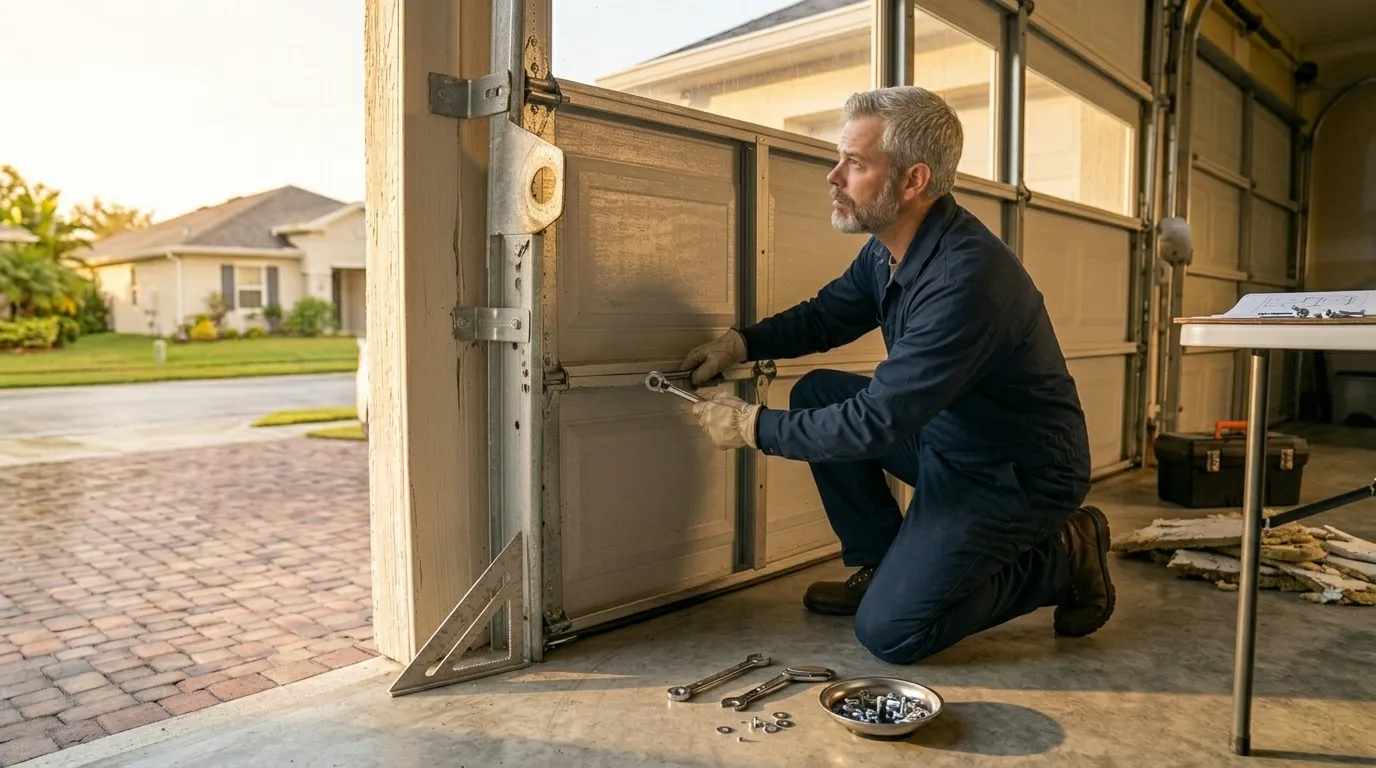
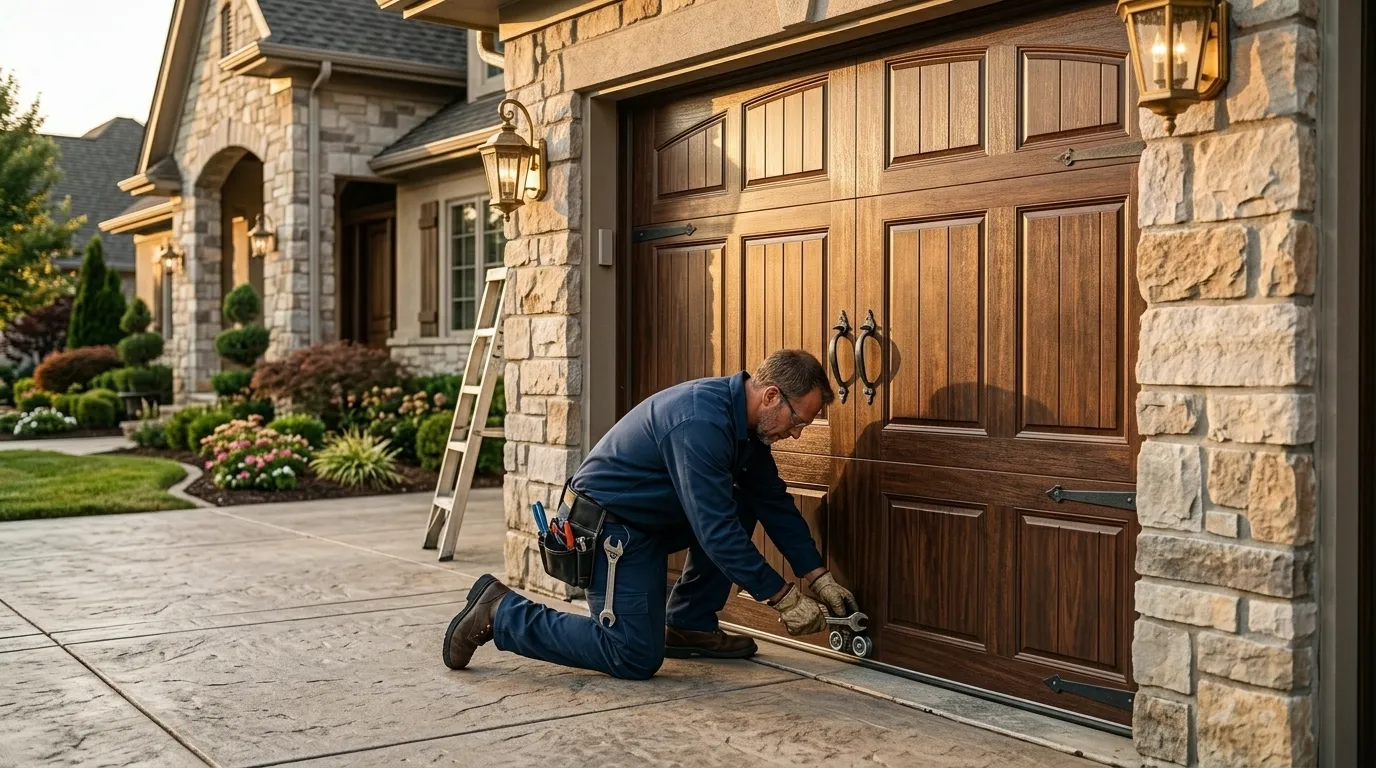
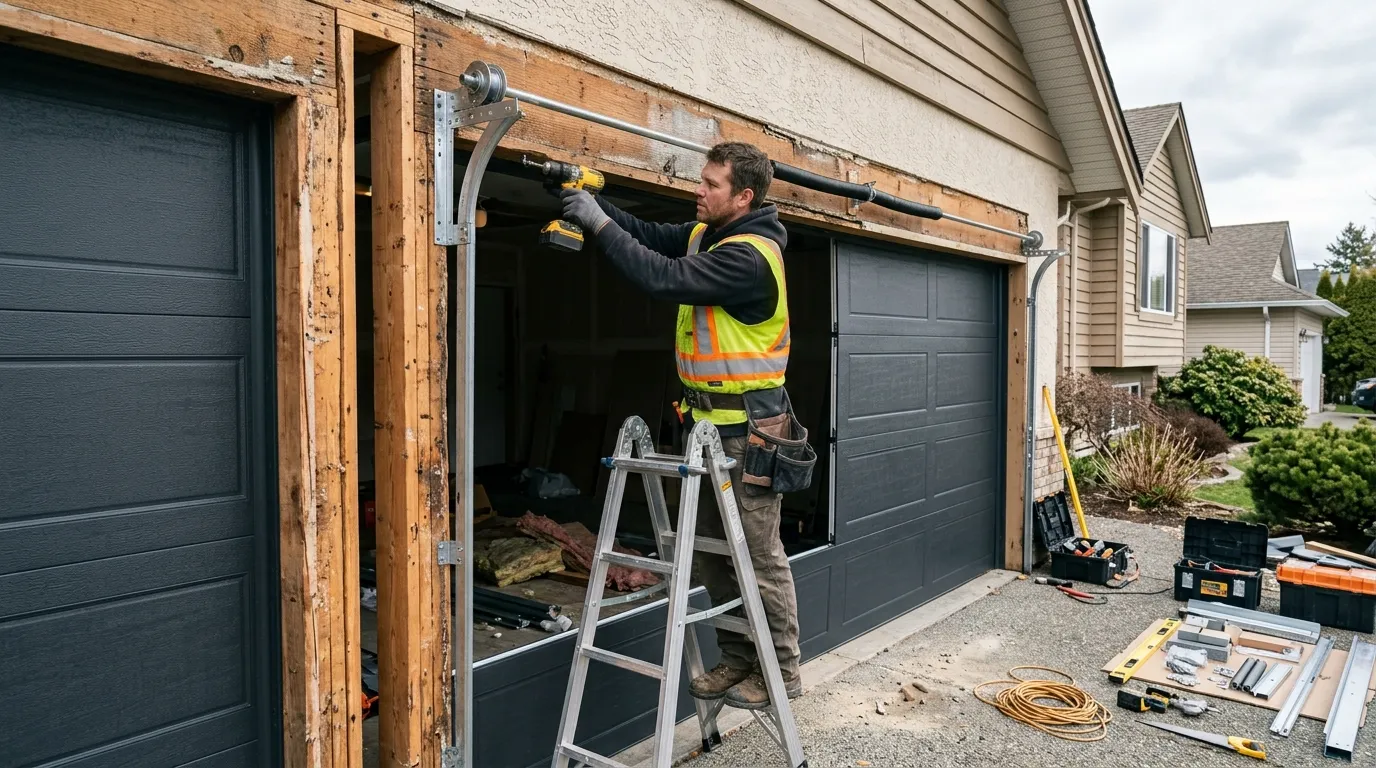
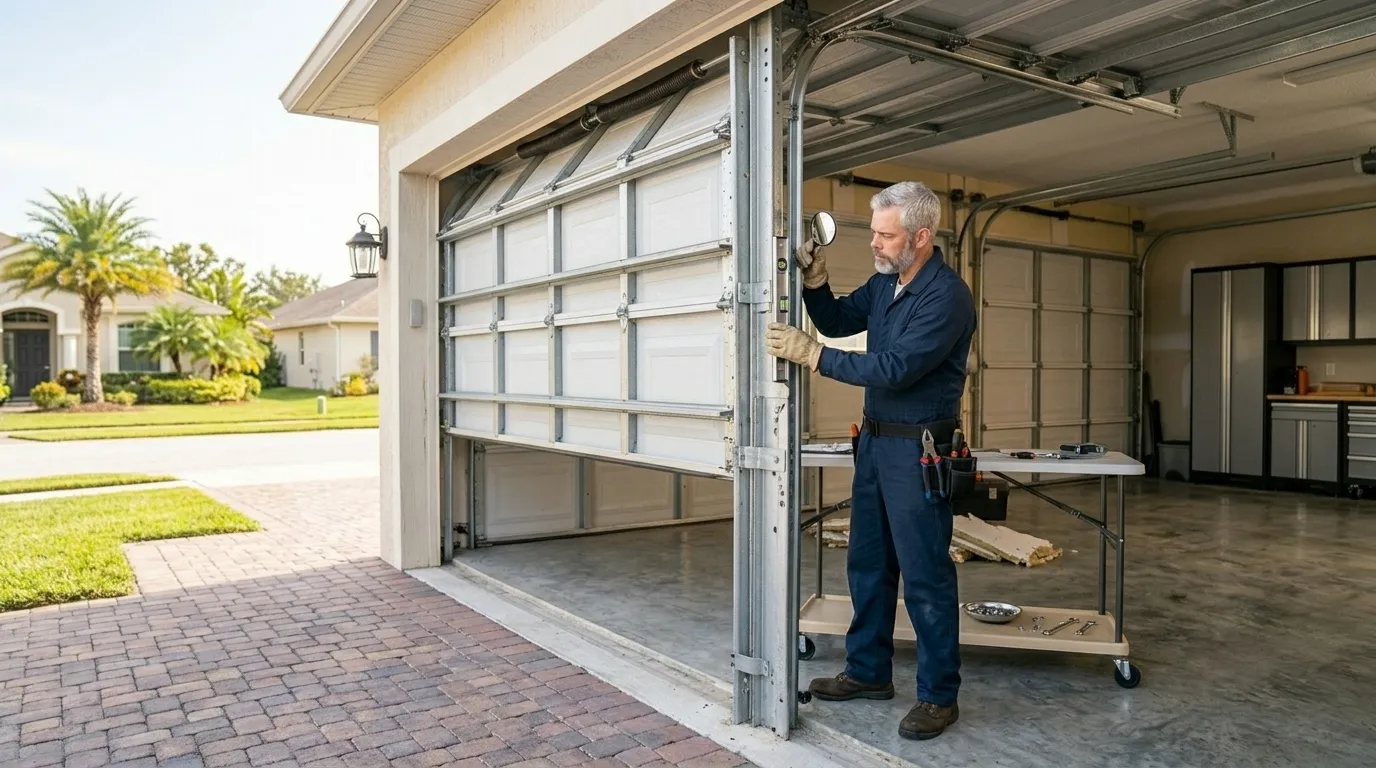
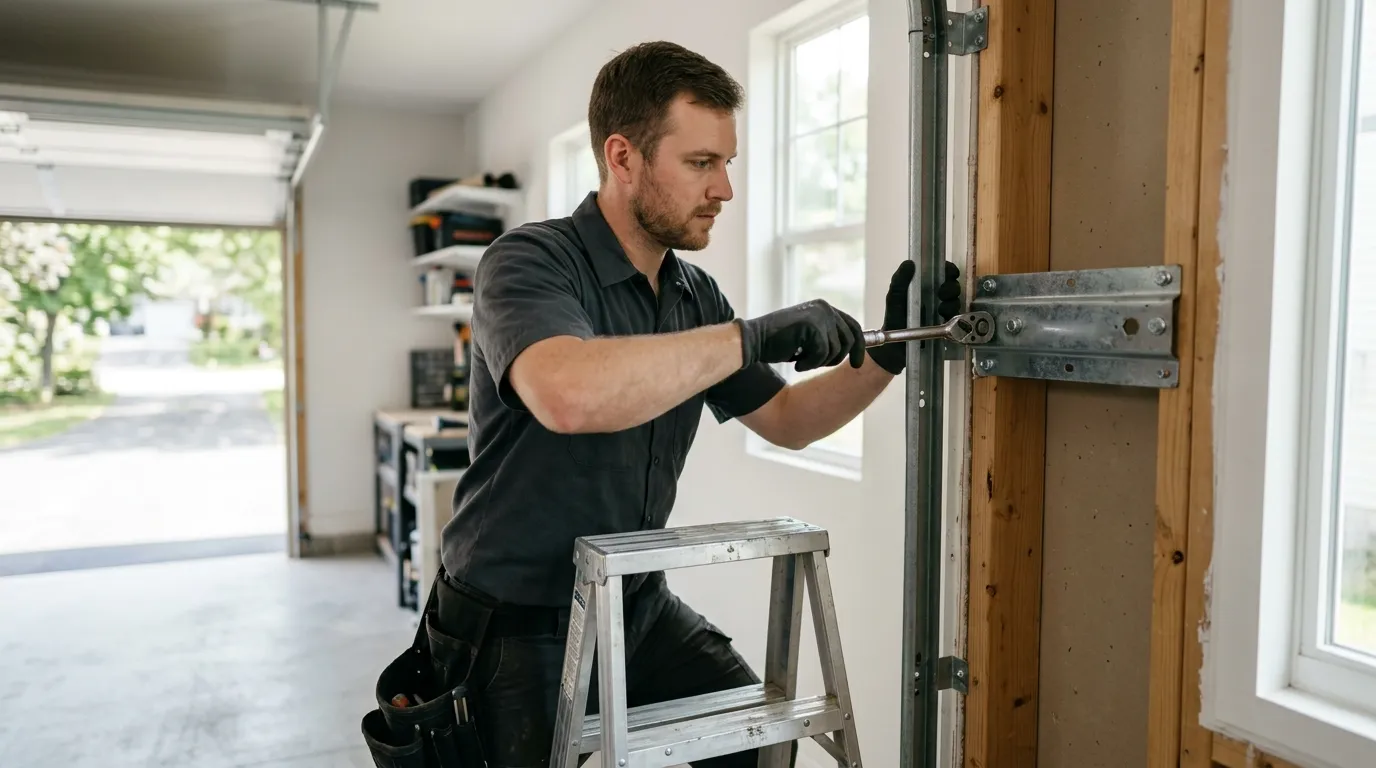
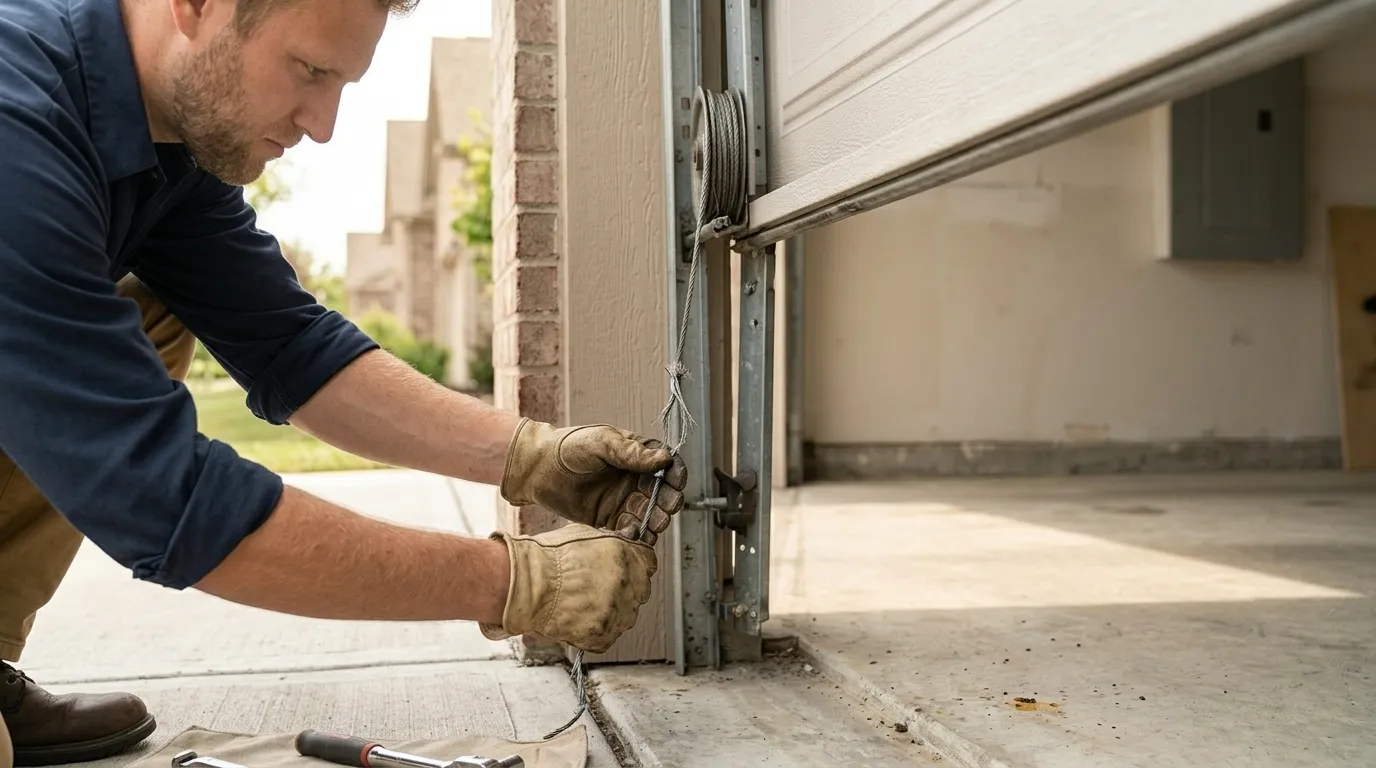
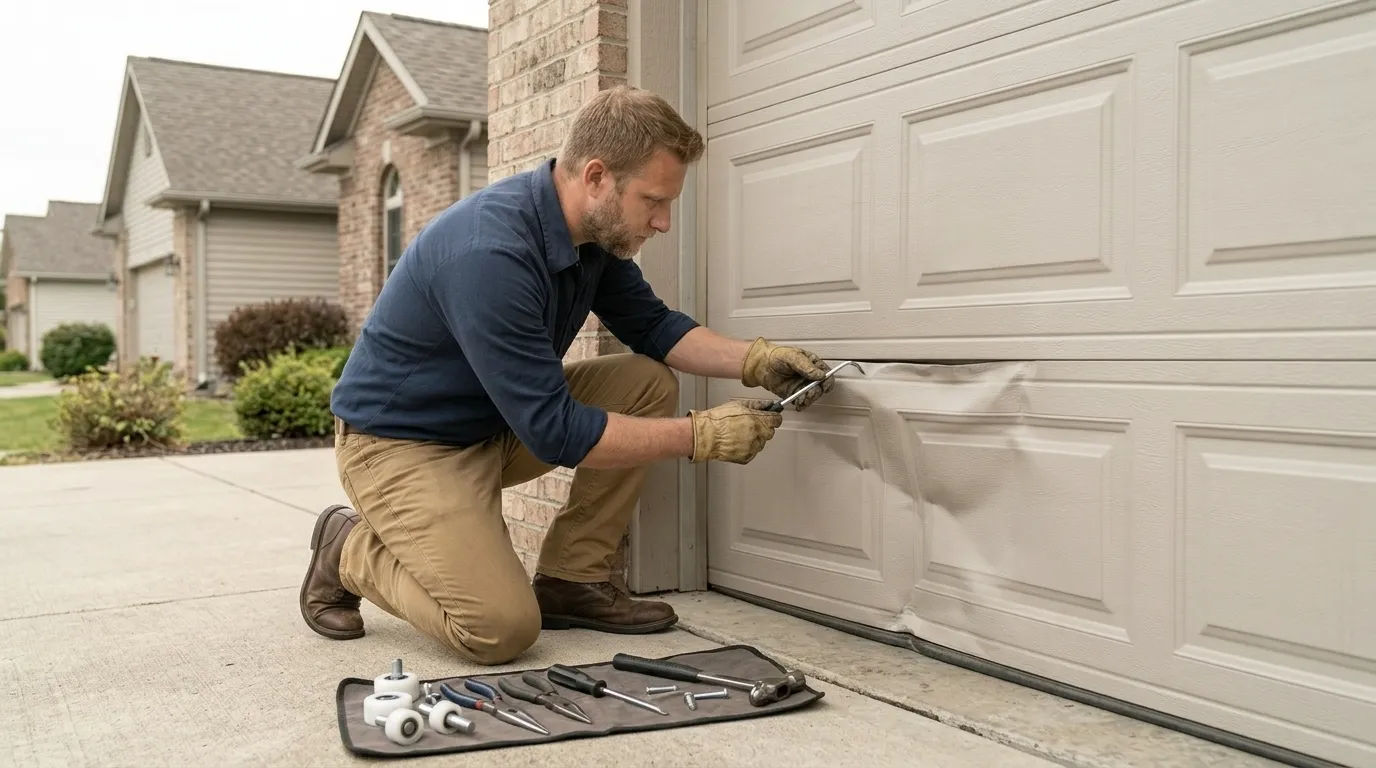
On a straightforward job, we pull the roller bracket, slide the old roller stem out of the track through the gap at the bottom section, and set the new one in. Steel rollers on a lot of these original 1990s installs need the bracket loosened, not removed, to get the stem clear. Nylon rollers with sealed bearings go in the same way but don't need the periodic grease that steel rollers do.
If only two or three rollers are bad, we replace those and leave the rest, no reason to swap parts that are still round. If the wear's spread across most of the set, which is common once original hardware hits this age, doing all ten at once saves a second trip.
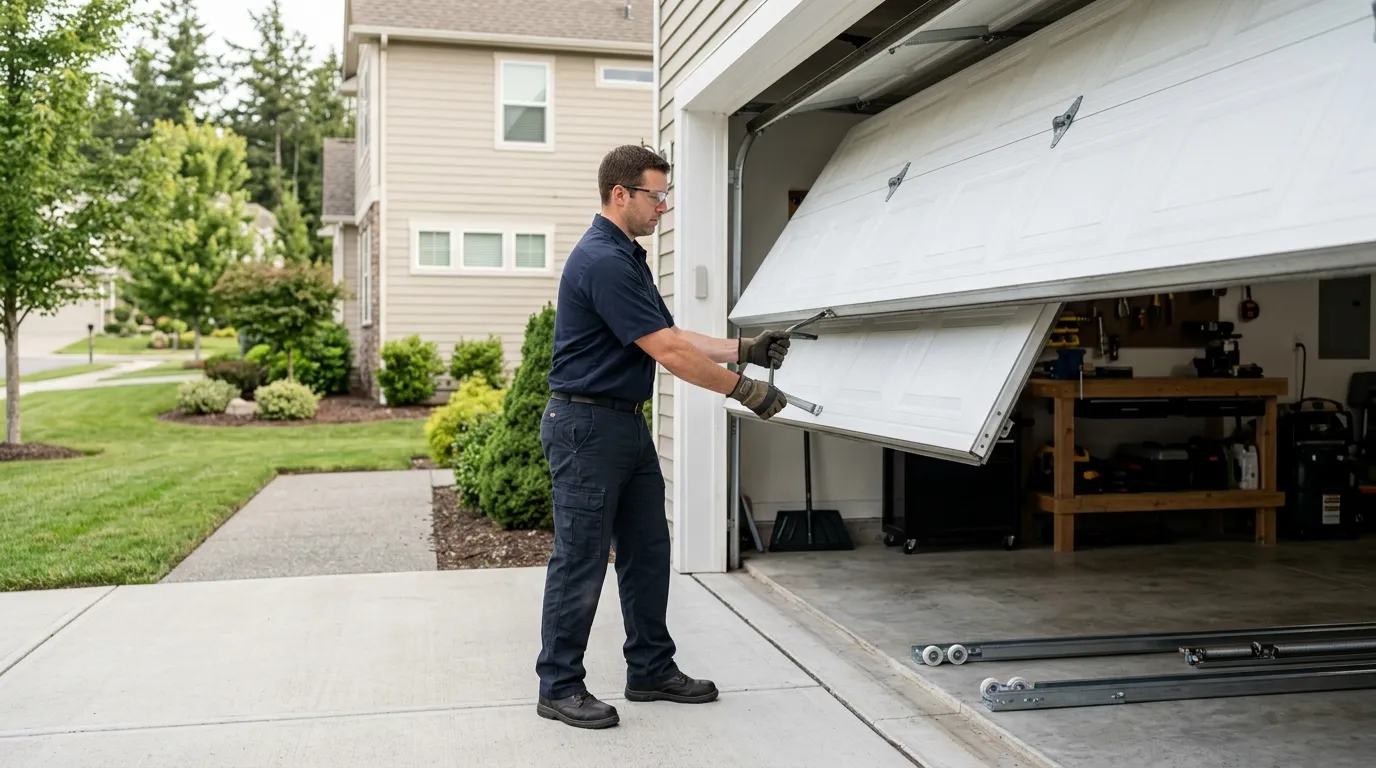
The honest limitation: if the track itself is bent or the rail brackets have pulled away from the frame, roller replacement alone won't fix the symptom, that's a track alignment job, sometimes a track replacement, and we'll tell you straight if that's what we're looking at instead of swapping parts that aren't the actual problem.