Booking a Visit
We run this call from Cheyenne, about two miles up the road, not from a branch sitting inside South Greeley. That matters for how you book: there's no local counter to walk into, no local voicemail box separate from the main line. You call, you describe what the door is doing, and a truck comes out from Cheyenne.
What we ask for on the phone is the door's size, whether it's a single or double, and roughly what year the house went up if you know it. Most of South Greeley was built in that 1989 to 1992 run, so we can usually guess the hardware before we even pull up the driveway - torsion spring, steel sectional panel, probably the original opener bracket. That guess saves a wasted trip for a part we didn't bring.
We don't keep a rotating stock of every spring size on the truck. If your door uses something uncommon for its age, we may need to order it and come back. That's the honest limit of a company covering ground from one shop rather than staffing a depot in every suburb it serves. We'd rather tell you that upfront than promise a same-visit fix we can't back.
How Long You Are Without the Door
Because the truck travels from Cheyenne rather than sitting two miles away, we can't offer a walk-up response time for South Greeley the way a shop physically inside the neighborhood might. Two miles isn't far, but it's not zero, and we'd rather give you a real window than a number that sounds good on a page.
Most jobs on doors from this build era - broken torsion springs, worn rollers, a cable that's frayed through - are same-visit work once we're on-site with the right spring size. The part that stretches the timeline is when a door needs something we don't carry as a default stock item: a specific drum, a track section for a non-standard door width, or an opener board for a control system that's twenty-plus years old.
If your household is one of the 1,922 in South Greeley and your door has never been touched since the house was built, plan on us needing to confirm parts before we confirm a date. That's not a sales tactic, it's just what a door built in 1989 and never serviced tends to need.
The Symptom
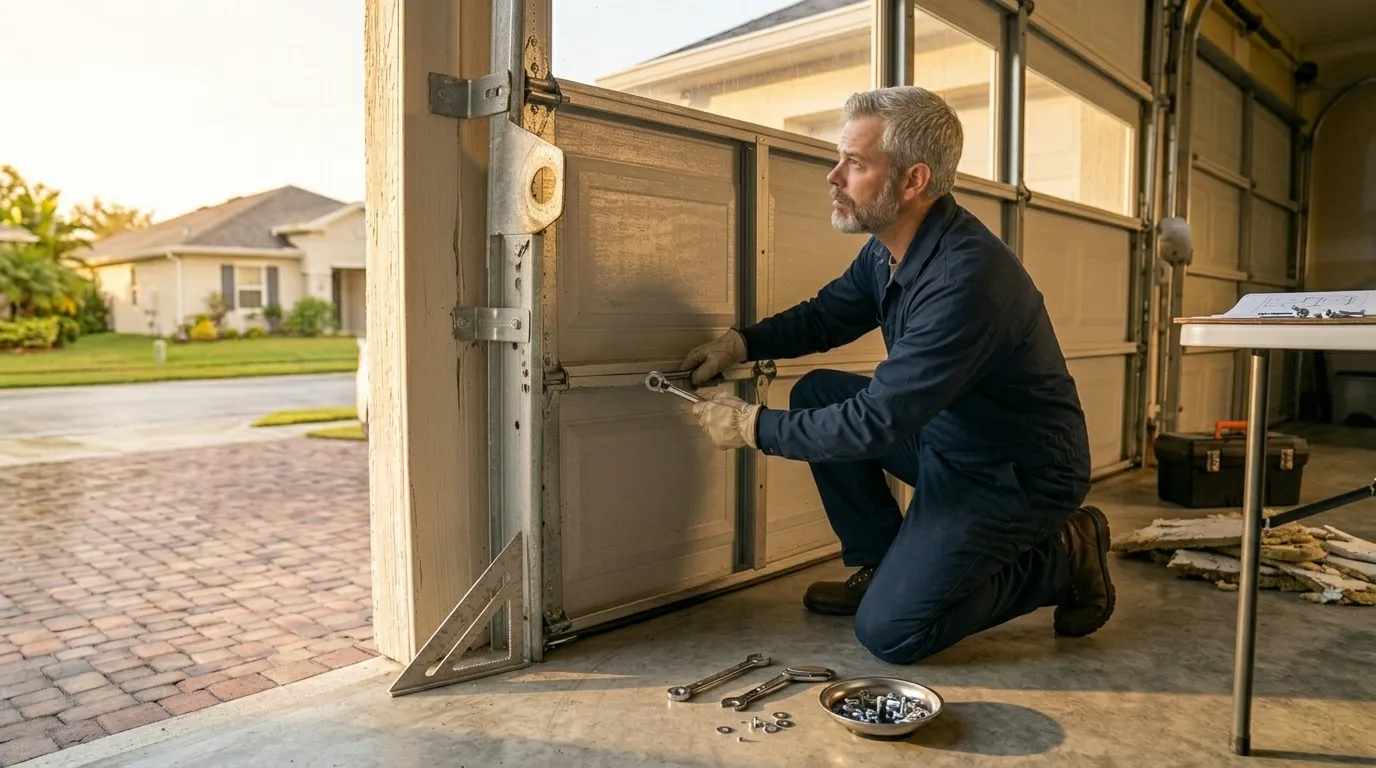
The complaint we hear most from this side of town is a door that won't go up at all, or goes up a few inches and stops - that's almost always a broken torsion spring on a door of this age, not the opener. A door built around 1989 has had three decades of winters on the original spring if nobody's replaced it, and steel fatigues whether or not it's ever failed before.
A second common one: the door closes but reverses partway, which on these systems is usually a sensor knocked out of alignment or a cable that's stretched unevenly on one side, pulling the panel crooked in the track. Given the median household income here is $53,625, most owners we talk to want that fixed as a repair, not treated as a reason to replace the whole door - and on hardware this age, that's usually the right call.
We don't replace a spring set just because one side failed. If the other spring is the same age and under the same load, we'll say so, but a door that's tracking straight and closing square doesn't need a full teardown just because one part broke.