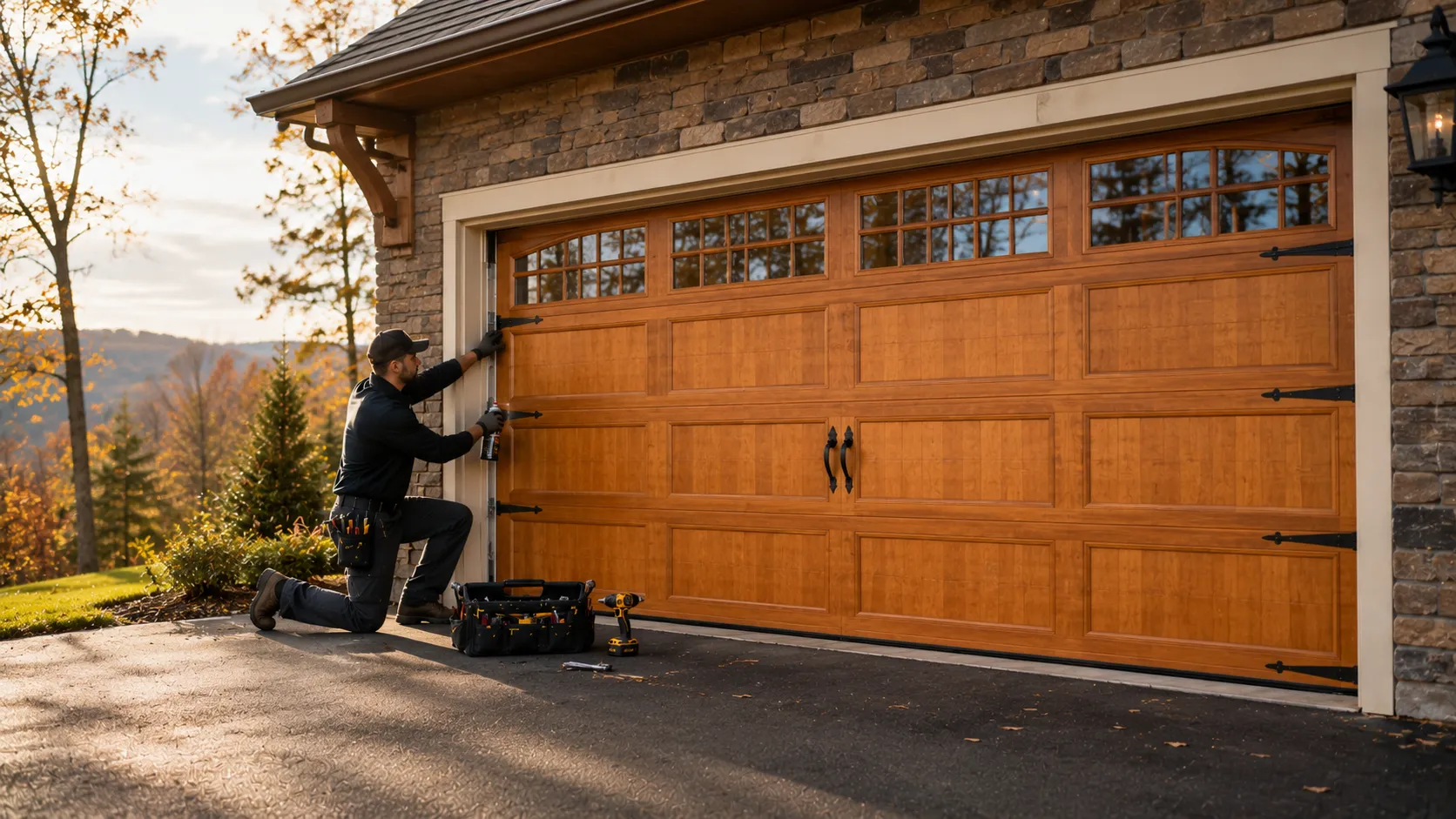
What the Weather Here Does to It
Cheyenne sits in a severe cold climate band, and that matters more for a garage door than almost anything else about it. Steel panels contract in hard freezes, and the rubber seal at the bottom of the door hardens and cracks faster than it would somewhere milder. Most of the housing in this service area, including the stretch around Fox Farm-College a mile out and South Greeley two miles further, went up between 1989 and 1992. That means a lot of these doors and their openers are pushing thirty years old, and they've spent every one of those winters going through freeze-thaw cycles that dry out lubricant, stiffen hinges, and pull screws loose from wood jambs that have shrunk and swelled for decades.
Out toward the Ranchettes, six miles from the center, the exposure is worse. More open wind means more sideways load on the track and more flex in a panel that's already thinner than what's made today. None of this means the door is done. It means the parts wearing out are predictable, and knowing which ones lets you decide whether a repair actually buys you more years or just delays a bigger job.
What Is Going On
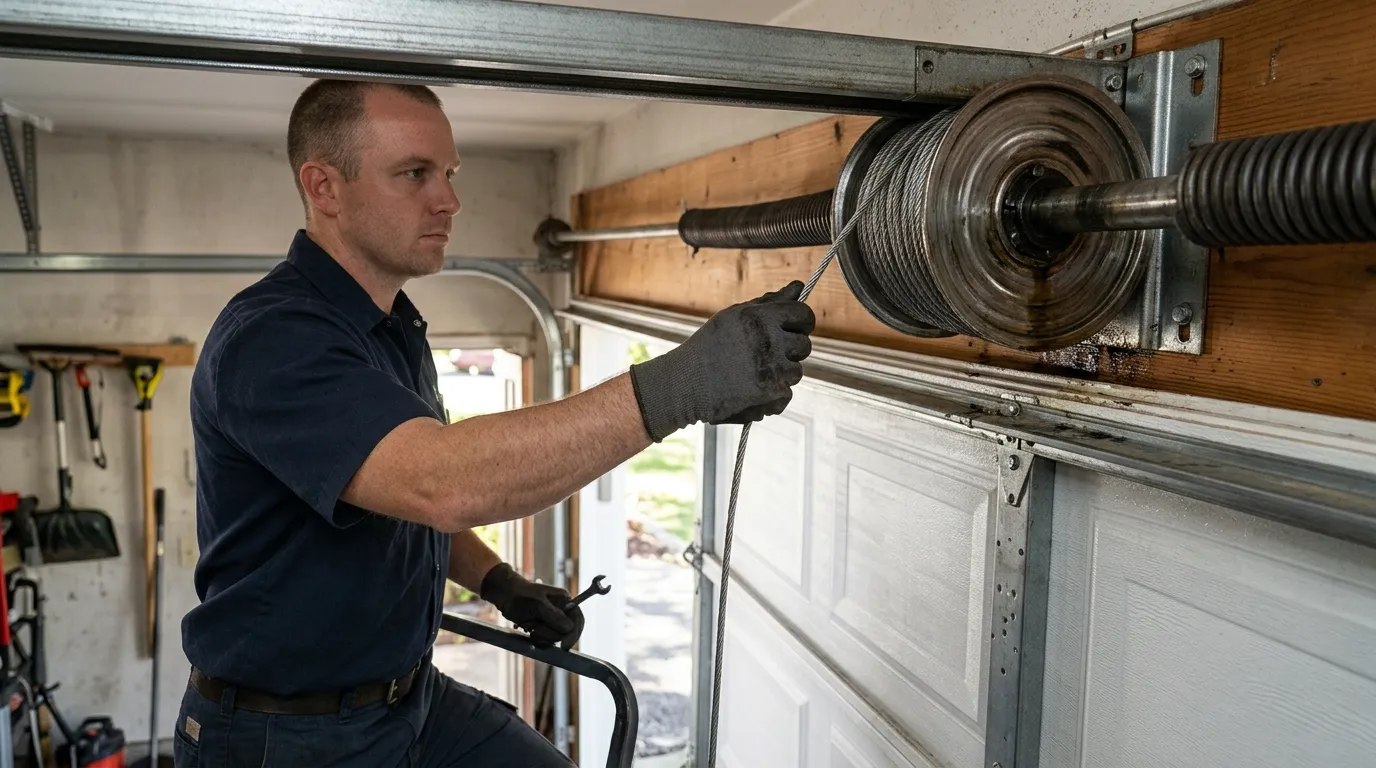
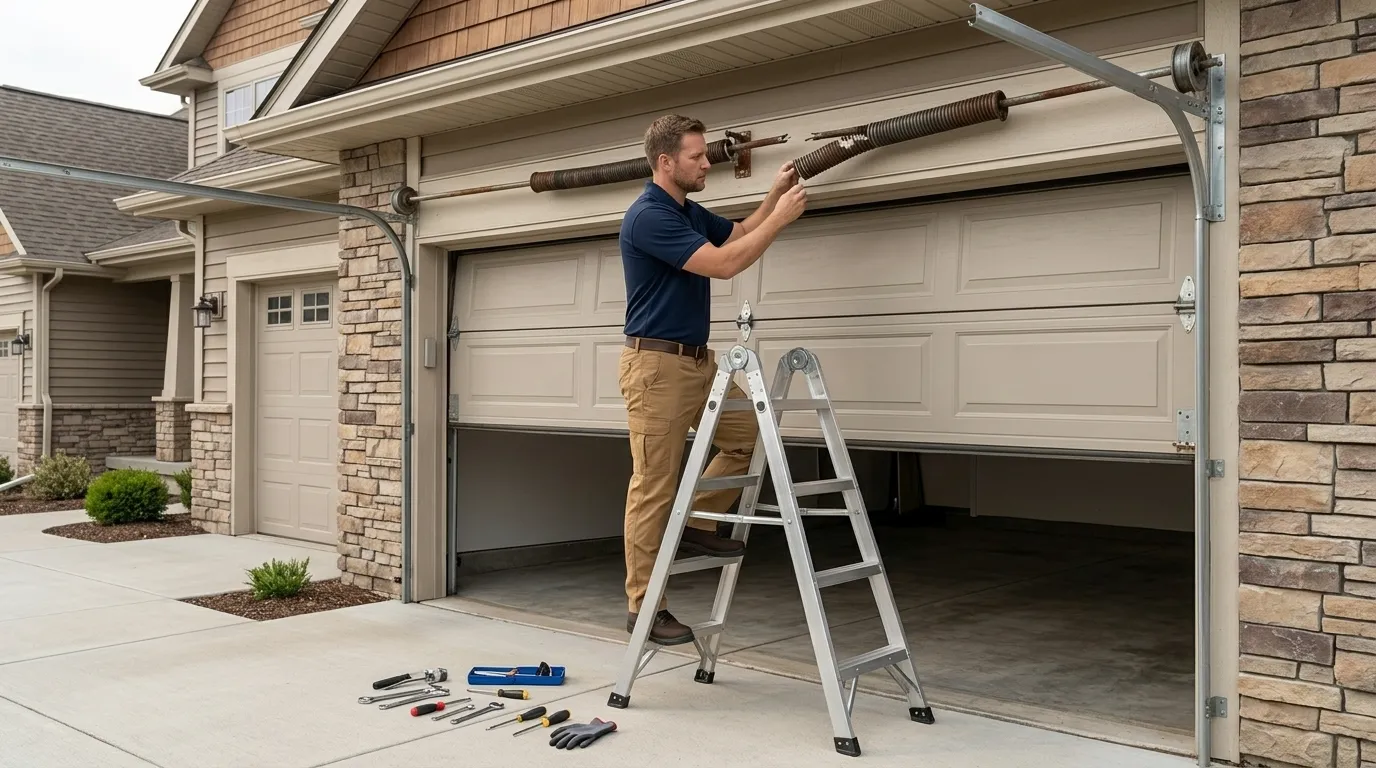
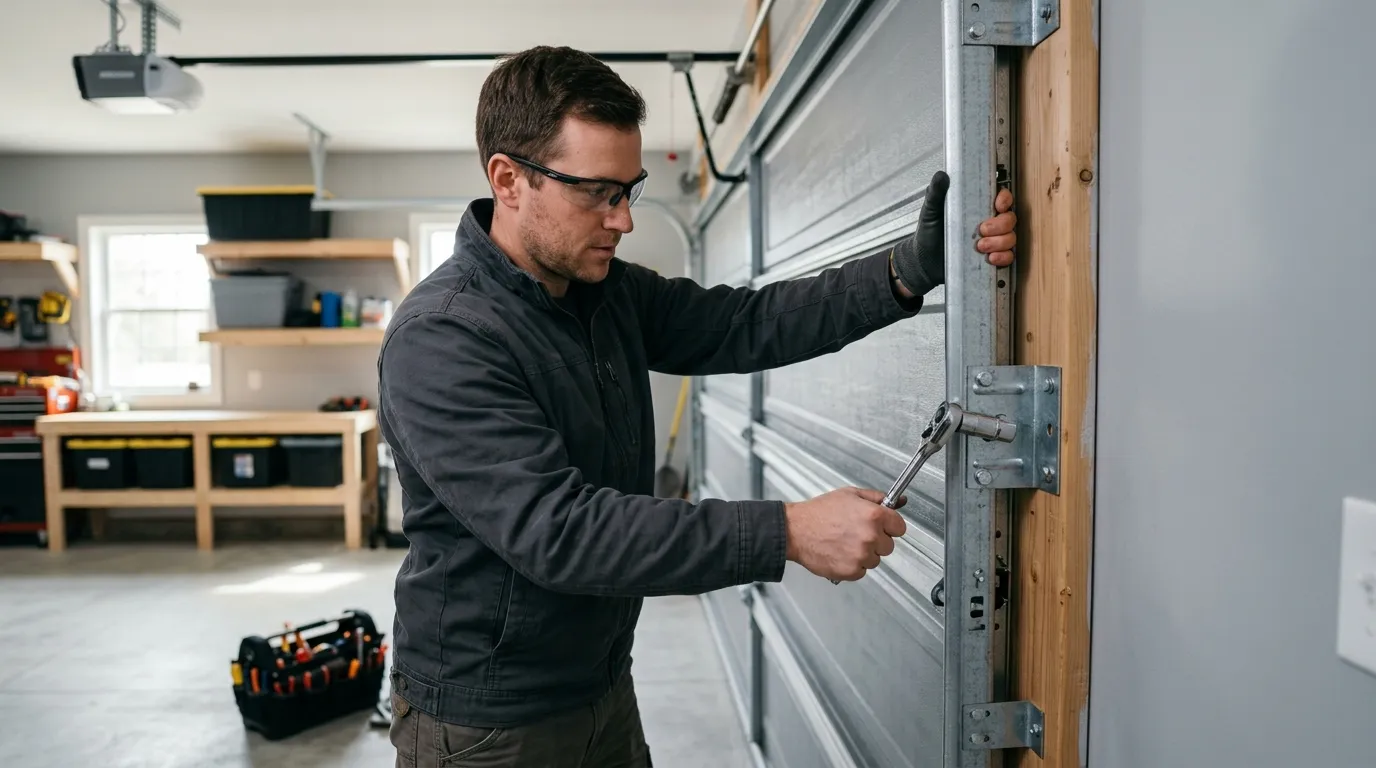
On a door from the 1989-1992 run, the failure points are almost always the same three things: the torsion spring, the bottom seal, and the rollers. Torsion springs from that era were built for a lower cycle count than what's sold now, and after thirty winters of contraction and expansion, most are near or past their rated life even if they haven't snapped yet. A spring that's audibly straining or leaving rust flakes on the floor is close to done.
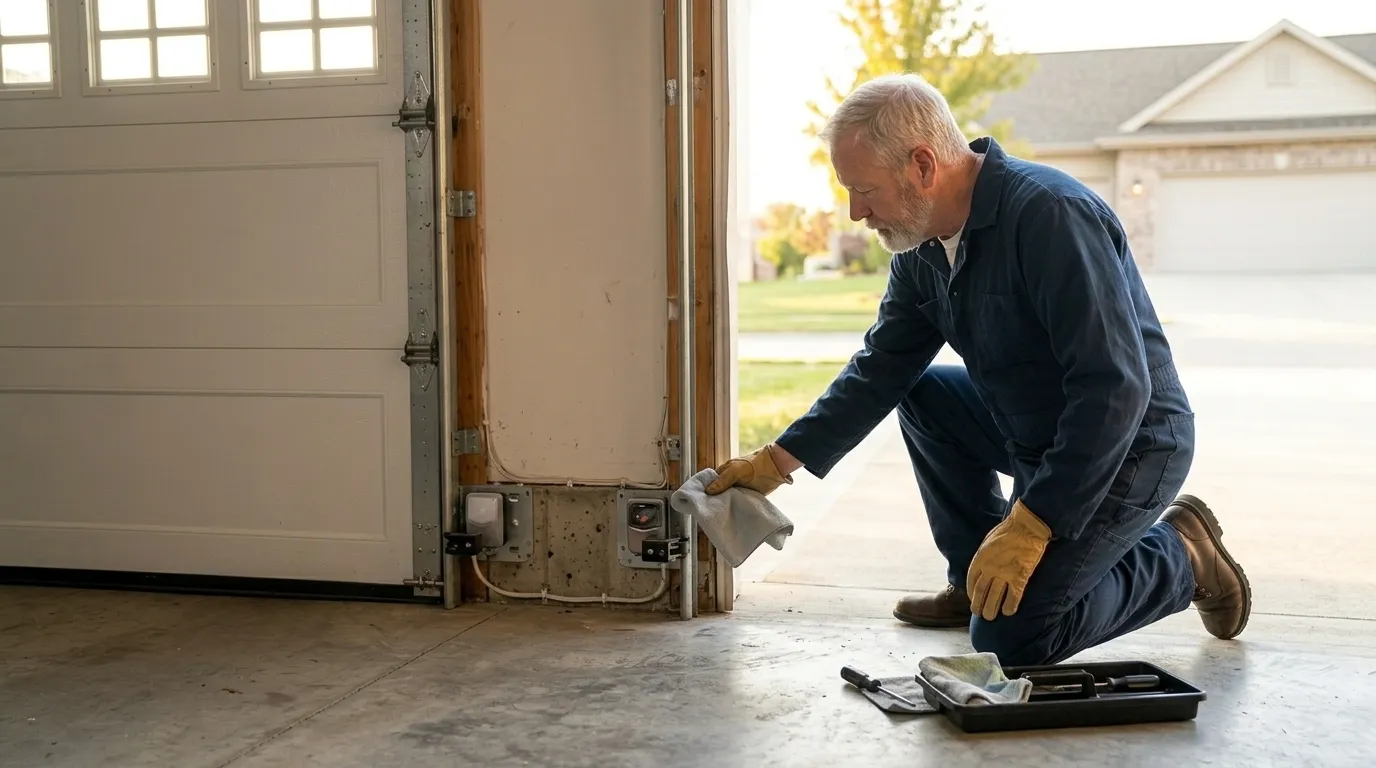
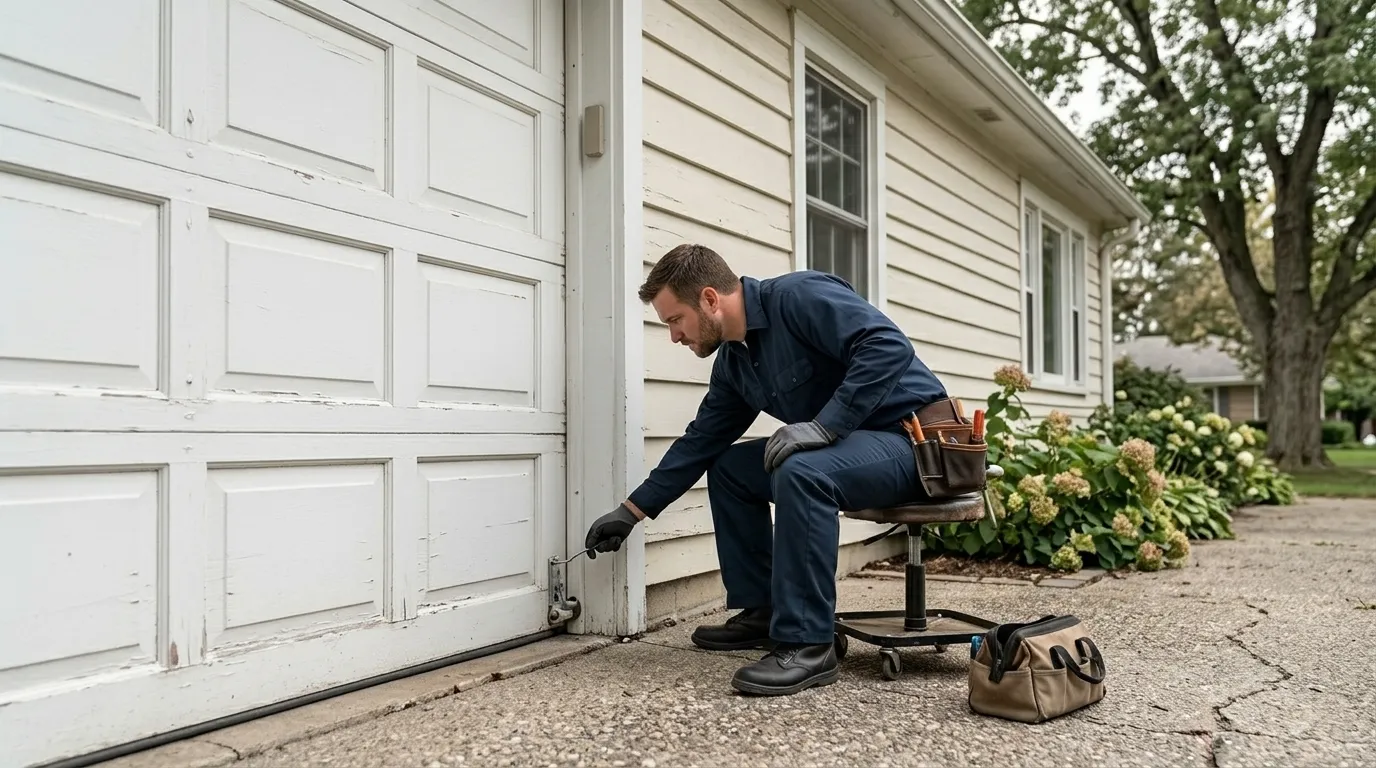
The bottom seal is the other constant complaint. Original vinyl from a 1990-era install has usually gone brittle, and once it cracks, cold air and moisture get under the door and start working on the bottom panel from underneath, which is where rust actually starts on these older steel doors, not on the face.
Rollers matter too. Steel rollers with no bearing were standard hardware in that period, and thirty years of grit and cold have usually worn the track groove unevenly, which shows up as a door that shudders or hangs up a few inches before the top. None of these three problems mean you replace the whole door. They mean you replace the parts that failed.
The Cost of This Job
We don't have a set price to quote here without seeing the door, and honestly any number thrown out before an inspection is a guess dressed up as a fact. What we can say is how the decision usually breaks down. A spring, seal, or roller repair on a 1989-1992 era door is almost always the cheaper path, and for houses in this service area - across a stock of 2,753 owner-occupied homes that's mostly 1980s-90s construction - that repair is often all the door needs for another decade of Cheyenne winters.
With a median household income of $53,625 in the area, most owners we talk to want the repair route to stay well clear of the cost of a full replacement, not just cheaper on paper. Replacement starts making more sense when the frame itself has racked out of square, when rust has gone through more than one panel, or when the opener and the door both need work at the same time. Short of that, fixing the specific failed part beats swapping the whole unit almost every time. The honest limit here is that we can't tell you which side of that line your door is on without looking at it.