How Long You Are Without the Door
Ranchettes is a small place - about 2,432 households, six miles out from Cheyenne - which means the opener calls we get here aren't spread across decades of different builds like they are in bigger neighborhoods. Most garages in this pocket went up right around 1992, so the openers failing now are either the original units nobody replaced or a second-generation unit installed sometime in the 2000s. That narrows down what we're looking for before the truck even leaves Cheyenne.
Because we're covering Ranchettes from Cheyenne and not staffing a branch out here, we don't quote a same-day window on this page - that's a scheduling conversation, not a fact we can print. What we can tell you is that a small service area like this tends to have fewer emergency calls stacked up on a given day than the denser parts of town, which works in your favor when you do call.
If your opener quit overnight in severe cold, don't assume the motor is dead. In this climate band, a sticking drive gear or a frozen sensor eye reads exactly like a burned-out unit until someone actually opens the housing.
The Cost of This Job
We're not going to print a number here that isn't in our records for this address, but here's what does change the number: openers original to a 1992-era garage in Ranchettes usually run chain drive on a rail that's outlived its lubrication, and the fix is either a drive gear kit or a full unit swap depending on how the housing has held up to cold-weather expansion and contraction.
Household income out here runs well above the rest of the service area, and what that actually changes on a repair ticket is the door on the other end of the opener - heavier insulated sections, sometimes a second opener on a two-bay garage, both of which put more load on aging drive components. That's a labor and parts conversation on-site, not something we're going to guess at from a distance.
One honest limit: if the logic board is the failure and it's an older belt or chain unit, the replacement board isn't always stocked for that model year. Sometimes a full opener swap is faster and cheaper than waiting on a specific part for a unit this old.
What the Repair Takes
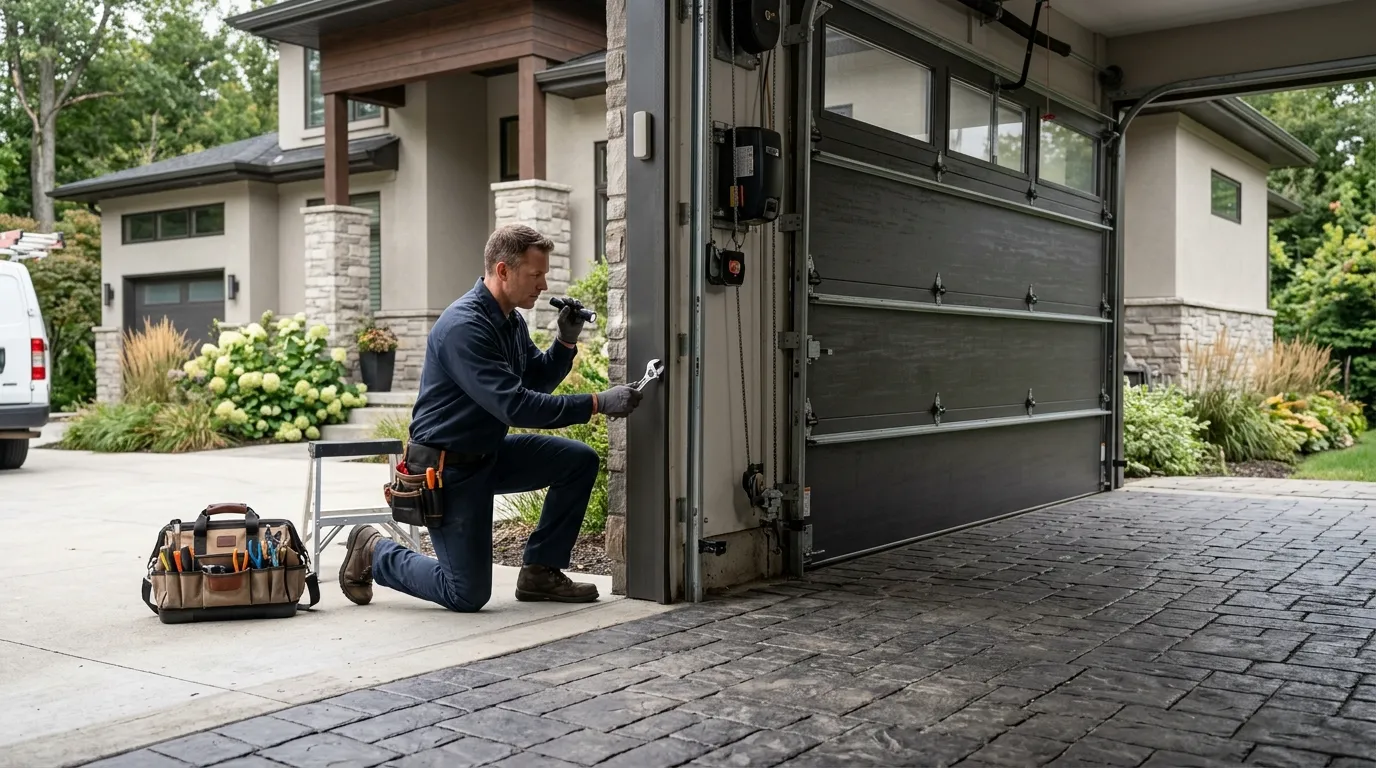
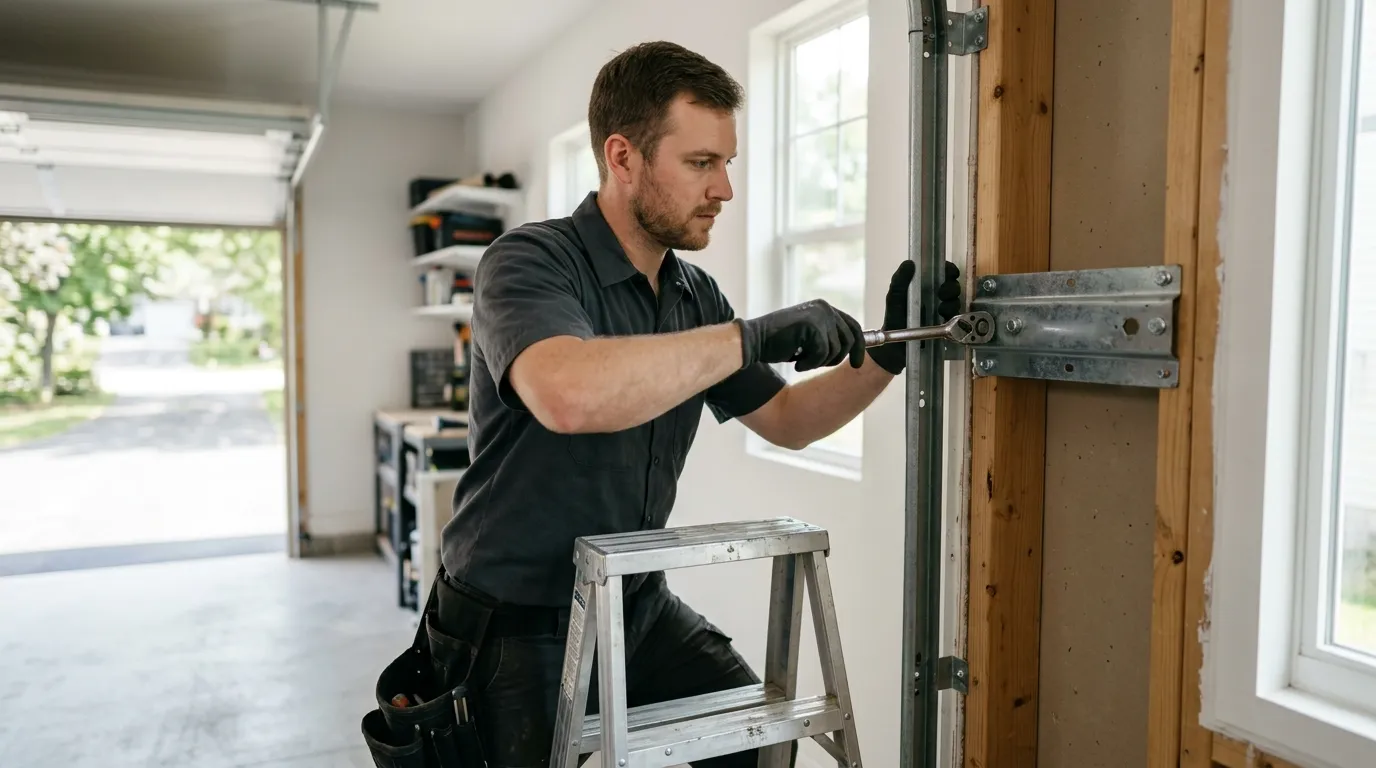
Most opener jobs break down into one of three things: the drive mechanism (gear, chain, or belt), the electronics (logic board, sensors, remote pairing), or the motor itself. In a place built out mostly in the early 90s, we see drive gear wear and worn safety-sensor wiring more than anything else - parts that have simply been running for three decades in a climate that swings hard.
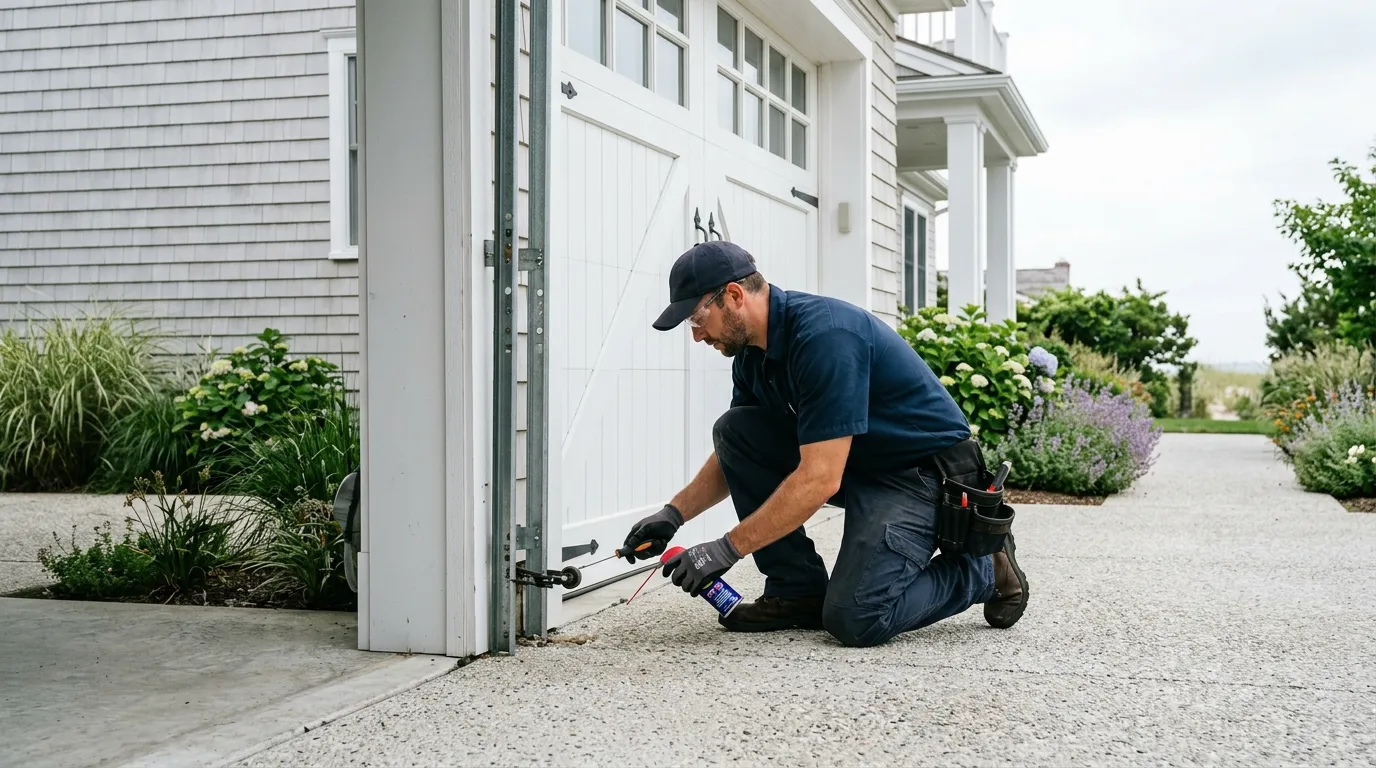
Severe cold does specific damage here: sensor eyes fog or shift out of alignment when the garage temperature swings, and lubricant on older drive gears thickens up and strips plastic teeth on cold mornings when the motor forces through resistance it shouldn't have to fight. We check both before we touch anything else, because replacing a motor when the real problem is a $20 sensor is money you didn't need to spend.
What we won't do is force a repair on hardware that's past it. If the housing is cracked from cold-cycling or the model is old enough that parts are special-order only, we'll say so and talk replacement instead of billing you for a patch that fails again by spring.